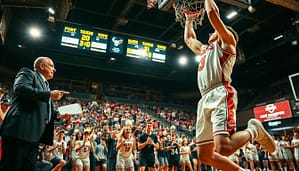
Forget the map on your phone. The real map is the Red River, right down the middle.
This isn’t just a line between border states. It’s a cultural divide where accents, barbecue, and football loyalties clash.
Today, we’re not talking about Dallas football. That’s well-known. I’m looking at the farm system.
Where does this rivalry practice? The answer is on the high school basketball court. Here, future stars learn to hate the other team’s color.
Events like the “Battle on the Border” in Shreveport make this rivalry real. They turn cultural clashes into athletic battles.
It’s more than a game. It’s a fight for territory, won with crossovers and three-pointers. Let’s explore this pipeline of talent and tension.
The Geographic and Cultural Divide
The Red River doesn’t just separate two states; it demarcates two distinct basketball ecosystems, each with its own DNA. Understanding the jump shots and full-court presses requires surveying the terrain. This rivalry is a border war fought with crossovers and three-pointers, where geography dictates philosophy.
Texas is an empire. Its basketball landscape is as sprawling and resource-rich as the state itself. It has vast talent pools, mega-schools with big budgets, and a depth of athleticism that mirrors the classic “go big or go home” ethos. When a Texas powerhouse rolls into a gym, they don’t just have a team; they have a roster.
Oklahoma, in contrast, operates like a proud nation-state. It’s built on resilience and a renowned ability to polish diamond-in-the-rough talent. The vibe is grittier, more tactical. With historically fewer raw resources, Oklahoma’s success is forged in system play, sharp shooting, and outsmarting opponents. They don’t always have the most five-star recruits, but they specialize in building teams that punch well above their weight class.
This fundamental clash of worldviews reaches its boiling point in high-stakes championship games. The tension isn’t just about the scoreboard; it’s a philosophical debate with a running clock. A Texas squad loaded with five D-I prospects meeting an Oklahoma team built on motion offense and defensive discipline is must-see theater. It’s athletic brawn versus calculated brain.
The blueprint for this spectacle is etched in history. Look at the century-old Red River Rivalry in football—that annual neutral-site showdown in Dallas. It captures the pure, distilled energy of the divide. Now, imagine that same interstate electricity, condensed into a packed high school gym with a playoff berth on the line. That’s the essence of this basketball exchange. The data shows the stakes: programs from these states boast a combined 11 national championships, a testament to the consistent excellence born from this very clash.
The table below crystallizes the core of this interstate cold war. It’s more than a comparison; it’s the playbook for understanding every tense possession when they meet.
| Aspect | Texas Basketball DNA | Oklahoma Basketball DNA |
|---|---|---|
| Core Philosophy | Athletic Empire: Depth and physical dominance. | Tactical Nation-State: System, skill, and resilience. |
| Resource Metaphor | Corporate Merger: Acquire and deploy top talent. | Artisan Workshop: Develop and refine overlooked gems. |
| Style of Play | Often predicated on transition, size, and individual athleticism. | Built on half-court execution, shooting, and team defense. |
| Championship Pedigree | Won through overwhelming talent pools and depth. | Earned by meticulous preparation and cohesive units. |
| Cultural Vibe | “Go big or go home” boastfulness. | Proud, underdog grit with a strategic edge. |
So, when tournaments like the “Battle on the Border” bring together teams from six southern states, the Texas-Oklahoma matchup is always the main event. It’s where these two basketball continents collide. The neutral-site history of Dallas isn’t just a footnote; it’s a prophecy for the kind of epic, season-defining championship games this rivalry produces on the hardwood. You’re not just watching a game. You’re witnessing a cultural fault line in action.
Historic Matchups and Tournament Meetings
To understand the rivalry between Texas and Oklahoma basketball, watch their top teams face off in tournaments. These games are more than just Tuesday night matches. They are cultural showdowns with a scoreboard, where a single move can be a big statement.
The “Battle on the Border” is a big deal, even if its football version gets more attention. Imagine Bishop Lynch, a top Dallas team, facing off against a Louisiana opponent. It’s not just a game; it’s a test of credibility. Winning here boosts a player’s reputation more than any rating.
These tournaments are like talent evaluation labs. They are intense, like a combine, but with the stakes of a playoff game. College coaches from all over watch closely, looking for more than just numbers.
College coaches see these games as exams. They’re not just looking at scores. They’re watching how players handle different situations. This is real, unscripted data that can’t be found in highlight reels.
Oklahoma’s Newcastle, a state champion, plays a certain way. Texas teams, known for their speed, play differently. When they meet, it’s a clash of styles. These games rewrite scouting reports in real-time. A standout player can change the balance of power in recruiting.
The atmosphere is electric. The gym is filled with pride and curious scouts. Every play is important. A block or a three-pointer can send a message to college coaches.
For players, these tournaments offer a glimpse into their future. They face top competition, showing what they can do at the next level. A strong performance here can boost a player’s basketball recruiting profile more than many local games.
These matchups are the unofficial record of the rivalry. Wins and losses may fade, but the impact on college coaches lasts. They shape offer lists and influence rankings, deciding which state gets the talent.
Remember, a score from a showcase event is more than just a number. It’s a report from the front lines of basketball recruiting.
Player Pipeline Between States
Forget the barbed wire and ‘No Trespassing’ signs; the most active border crossing between Texas and Oklahoma isn’t on a map, it’s on the hardwood. The interstate athlete flow is a fascinating, two-way street of talent migration. It’s like a strategic brain (and brawn) drain, each state siphoning off talent to fuel the other’s success.
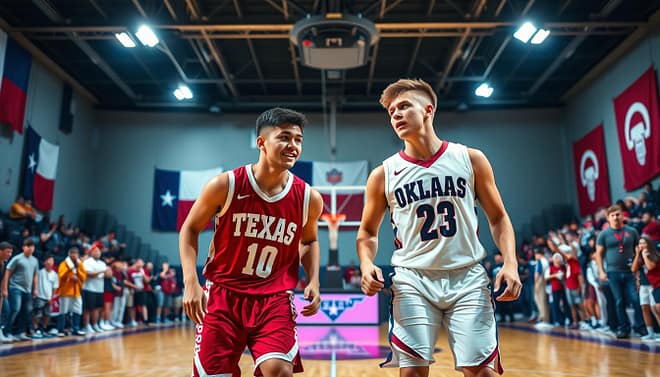
This pipeline isn’t random. It follows a distinct, almost poetic logic. You can typically trace the currents:
- Oklahoma Guards Heading South: They often bring a trademark, gritty toughness to Texas programs. This toughness is forged in gyms where physicality is a must. It adds resilience that can win close playoff games.
- Texas Big Men Going North: The Lone Star State exports athletic big men. Their size and footwork, honed against elite Texas athletes, dominate smaller Oklahoma frontcourts. This creates a matchup nightmare that reshapes local power dynamics.
But how does this exchange happen? The real magic occurs off the official schedule. Summer club ball circuits and AAU tournaments are the great melting pots. An Oklahoma kid might spend his July playing in Dallas, absorbing new offensive sets and a faster pace.
He returns north not just with improved skills, but with firsthand intel. He’s seen the “enemy” up close. This cultural cross-pollination ensures play styles evolve in tandem, each side borrowing from the other.
This constant churn is the lifeblood of the rivalry’s evolution. It prevents the competition from going stale. If one state develops a tactical edge, the pipeline ensures that edge eventually leaks across the border. It’s an endless arms race where the weapons occasionally change hands. For a deeper look at how this dynamic has played out over decades, including legendary figures who crossed the line, the history of the Red River Rivalry offers a masterclass.
So, while fans see a stark divide on game night, the reality is a porous border. The Texas vs Oklahoma basketball pipeline isn’t about betrayal; it’s about osmosis. It keeps both sides honest, perpetually scouting, and guarantees that the next chapter of the border battle is always written by players who understand both sides of the river.
Coaching Philosophy Differences
The battle between Texas and Oklahoma in basketball is about two main ideas. Is it all about explosive plays or careful planning? Coaches are like generals, and their strategies show what each state values.
Texas coaching is bold and fast-paced, like a wildcatter finding oil. It focuses on quick, flashy plays that show off athletes’ skills. This style is not just about scoring; it’s a statement of pride.
Oklahoma, on the other hand, values smart tactics and teamwork. With fewer top athletes, they build strong systems that work well together. It’s more about teamwork and strategy than individual shows.
This clash makes the interstate rivalry exciting. Is it better to have a few stars or a team of skilled players? Does a tough defense beat a fast offense? These questions are answered in games, not books.
History shows a similar battle in football. Darrell Royal’s Wishbone offense was a smart move against Bud Wilkinson’s Oklahoma. Today, basketball coaches face the same challenge. The team that outsmarts the other wins, gaining an edge in recruiting.
| Philosophy | Core Tenet | Typical System | Player Development Focus | Historical Analogy |
|---|---|---|---|---|
| Texas: The Entrepreneur | Leverage superior athleticism to create explosive, high-value plays. | Up-tempo transition offense; aggressive man-to-man defense. | Individual skill creation, iso-scoring, highlight plays. | Darrell Royal’s innovative Wishbone offense at UT—high-risk, high-reward. |
| Oklahoma: The Engineer | Build a system where precision and collective effort overcome talent gaps. | Methodical half-court sets; complex zone or help-defense schemes. | Fundamentals, role understanding, basketball IQ, endurance. | Bud Wilkinson’s strategic OU football dynasty embodies the interstate rivalry mindset. |
Look at the coaches’ backgrounds. J.T. Curtis is a prime example of a program builder. His success comes from stability and a strong system, like many Oklahoma coaches. Texas, on the other hand, attracts talent with its flashy style and swagger.
When these philosophies clash, it’s a battle of wits. Texas coaches face a defensive challenge, while Oklahoma coaches must handle a storm of athleticism. The halftime adjustment is key. This adds depth to the rivalry, making it more than just a game.
Recruitment Wars Across State Lines
Imagine a game of chess with teenage athletes, where every move is strategic. This isn’t just basketball recruiting; it’s a cold war. The stakes? Scholarship offers. The battleground? The 200-mile border between Texas and Oklahoma.
College scouts from both states watch this border like spies. They aim to find and recruit talent from the other side. A 6’8″ forward in Amarillo might get offers from Oklahoma State and OU, right next to Texas Tech’s.
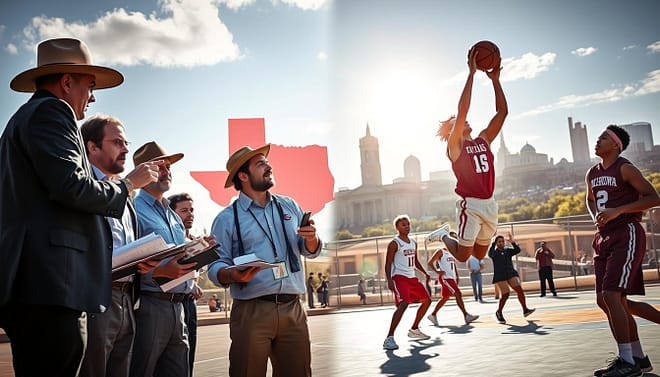
This is poaching. The goal is to take top players from rivals. Winning a kid from just 20 miles away is a big victory. It boosts your program for years and hurts your rivals.
The real recruitment wars happen on three fronts:
- AAU Circuits: These teams are where players and coaches form bonds. Is a player’s coach talking to Oklahoma or Texas?
- Summer Camps: Elite camps are for showing off skills. A standout performance is a signal to rival scouts.
- Social Media: Highlight reels are like propaganda. A viral dunk is seen by everyone, including rivals.
Platforms like the Oklahoma Sports Network are key. They’re not just broadcasting games; they’re showing off talent. Every highlight is a recruitment ad for rival coaches. Texas has its own media machines, too. It’s a constant battle for attention.
The goal is endless competition. There’s no end to this battle. The basketball recruiting calendar never stops, and the quest for an edge never ends. Winning today means preparing for tomorrow.
Why does it feel so personal? It’s because it is. Coaches and programs have a long history. Recruiting a key player is about proving your program’s strength. It’s about showing you can attract talent across borders.
Notable Players Who Crossed Borders
What fuels a rivalry more than a shared enemy? A traitor from within, like a basketball player. The Texas-Oklahoma feud is fueled by these defections. It’s not just about college recruitment; it’s like a geopolitical shift.
Imagine a five-star Oklahoma kid choosing Texas over Oklahoma. His reasons might be a better system or a perceived slight. To fans back home, it’s seen as treason. On the other hand, a Texas star choosing Oklahoma becomes a legend there and a villain here.
These player moves are more than just trades. They turn a game into a story of betrayal versus destiny. The player is not just playing for wins; they’re proving their choice with every point. This creates a myth that fans will debate for years.
Was the player a visionary or a mercenary? The answer is often debated.
The rivalry peaks in the championship game. When these teams face off, the tension is palpable. The arena’s energy is not just electric; it’s toxic. Every shot the border-crosser makes is a dagger. Every miss is met with vindictive cheers.
The player becomes the hero of a high-stakes sports drama. Winning a championship game against their home state is a complex victory. It’s a mix of triumph and public guilt.
These players are the ultimate plot twists. They show that rivalries are lived by people making choices that echo across state lines. They add a human, often messy, heart to the rivalry. Without them, it’s just a game. With them, it’s a legend.
Future of the Interstate Rivalry
Trying to guess what’s next in this rivalry isn’t about magic. It’s about understanding the digital world. Sites like the Oklahoma Sports Network are changing how we watch these games. Streaming and apps bring the rivalry to fans everywhere.
This digital focus makes every game more important. Fans from all over can watch Texas vs. Oklahoma. This means more talent and every play matters more. The rivalry might grow into bigger, more special events.
Recruiting will get a big boost from NIL deals. These deals mean more money for top players. But the core of this rivalry will stay the same.
Texas’s size will always clash with Oklahoma’s determination. It’s about more than just sports. This rivalry is rooted in history and culture. It will keep evolving, finding new stars and venues. The game is always on, and the rivalry is always next.