
Forget crude oil. The most valuable export from Texas isn’t pumped from the ground. It’s developed on the hardwood.
While Silicon Valley codes, Texas cultivates a different kind of processor. The cold-blooded, late-game operator. I’m looking at you, LJ Cryer and Jamal Shead. One’s a transfer with a championship ring, the other a homegrown floor general. Both carry the unmistakable swagger of Texas high school basketball.
This is a talent pipeline with a proven ROI. When the pressure of March Madness mounts, these are the players who cash the checks their prep careers wrote.
It’s not an accident. It’s a supply chain of clutch performers. Forged in humid gyms and under a Friday Night Lights ethos—just with a jump shot.
High school preparation programs that developed NCAA tournament performers
Texas high school basketball is more than a sport; it’s a training ground for mental toughness. The graduation rate for NCAA tournament performers is surprisingly high. It’s not about getting a scholarship first.
It starts in local gyms where winning is the main lesson. The homework is about being resilient.
Morton Ranch High School in Katy is a prime example. It wasn’t just where LJ Cryer played. It was where he was built.
This is key. These programs focus on building a competitive mindset. They teach the importance of hard work and resilience.
At Morton Ranch, it’s not just about drills. It’s about performing under pressure. College scouts watch from the stands. The kids learn to handle the pressure early on.
LJ Cryer was ready for Baylor and Houston. He had the skills and mindset already. Coaches like Kelvin Sampson refine the “little things” in Texas.
These programs prepare kids for the NCAA tournament. They learn to handle the pressure and perform under bright lights. It’s not just about playing; it’s about being ready.
The games in Texas are designed to prepare for March Madness. They focus on speed, physicality, and clutch performances. It’s not just preparation; it’s preparation for success.
Players from Texas are ready for the college basketball world. They see the NCAA tournament as a bigger challenge. Texas high schools are the incubators for NCAA success.
Notable runs Texas prep players starring in memorable NCAA tournament games
Looking for the most iconic performances in the tournament? Skip the college scouting reports and check the box scores from last year’s Texas state playoffs. The pressure of March Madness feels like a homecoming for Texas players.
Where does that ice-in-the-veins composure come from? It’s bought early, in packed regional finals where your town watches. This environment is a brutal, beautiful boot camp for the Big Dance‘s single-elimination chaos.
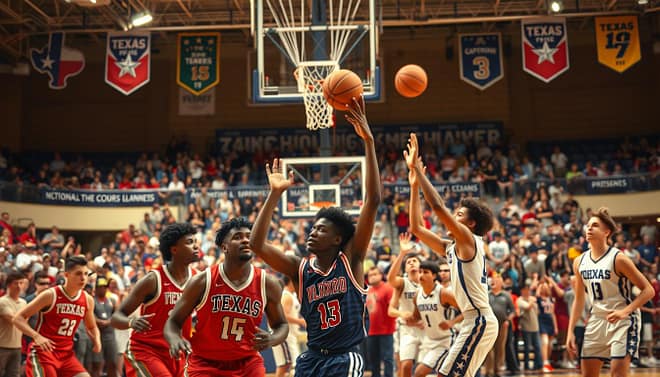
It’s a transfer of competence. The skills are the same: quick first step, reliable jumper. But the mentality—the willingness to take, and make, the season-defining shot—is the real export. It turns a good player into a tournament hero.
Let’s talk about a signature moment. March 19, 2021. North Texas, hunting its first NCAA Tournament win. The stage was set for a legendary performance, and Butler High School alum Mardrez McBride decided he was the man for the job.
Sixteen points. Not a massive total on paper. But in context? It was the precise, explosive contribution needed to etch a program into history. McBride didn’t just play; he authored a new chapter for North Texas. This wasn’t an accident.
It was the culmination of a Texas-bred education in handling the spotlight. For a player like McBride, the blinding glare of a national broadcast felt no different than the intense focus of a Texas high school playoff crowd. Just another game where everything is on the line.
These are the runs that define careers and fuel March Madness lore. They aren’t just statistical outbursts. They are legacy-defining explosions timed perfectly for when the world is watching. The Texas prep alum seems to treat this immense pressure like a familiar old lamp—something that illuminates.
Think about what it takes. You have one game, maybe forty minutes, to become immortal in the eyes of college basketball fans. Most players tighten up. The Texas-trained player? They often lean in. They’ve been prepped for this their whole lives.
This is the ultimate payoff of the Texas pipeline. It doesn’t just produce athletes; it forges competitors who are psychologically optimized for win-or-go-home scenarios. The memorable NCAA Tournament game is their final exam, and they’ve been acuing the practice tests for years.
So, the next time you see a relatively unknown player drop 20 in a shocking first-round upset, don’t just marvel at the college coach. Look up where he played high school ball. Chances are, you’ll find a town in Texas already celebrating, because they saw this tournament hero coming from a mile away.
Coaching development Texas high school coaches who produced college stars
The no-nonsense, defensive ethos of elite college programs comes from Texas high schools. Before college, players’ basketball skills are shaped by prep coaches.
These coaches are the unsung heroes of the pipeline. They focus on the basics, not the flashy stuff. They lay the groundwork for college coaches like Kelvin Sampson to build upon.
They aim to create a transferable product. A raw athlete becomes a durable, coachable player. They focus on fundamentals that become second nature.
This isn’t about fancy plays for local headlines. It’s about building players for March Madness.
In every NCAA tournament, you see their work. That guard taking a charge? A Texas high school coach taught that years ago. The big man with perfect post footwork? That’s a prep coach’s touch.
The glory goes to the college star, but the blueprint was drawn in a Texas high school office.
The best coaches are honest, like Sampson. They tell players they’re playing lazy defense or that their left hand is for more than balance. This tough-love realism is key in Texas.
It’s the same kind of mentorship seen in legendary Texas high school coach Todd, who shaped stars in football with the same intensity.
Their legacy isn’t just in state titles. It’s in the steady flow of Texas prep stars who contribute right away in college. They are the first chapter in every March Madness success story from Texas.
Skill development programs that translated to college tournament success
The journey from Texas high school gyms to NCAA tournament stars is not just about being athletic. It’s about having a special set of skills. These skills come from hard work and a strong defensive mindset.
LJ Cryer learned a valuable lesson from NBA scouts. Houston coach Kelvin Sampson taught him how to improve his defense. Cryer realized, “If you don’t buckle down on the defensive side of the ball, you’ll get exposed.” This shows the importance of being a two-way player.
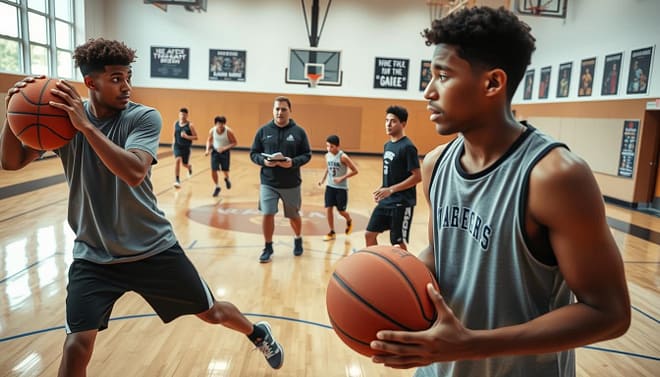
So, what are these skills? Jamal Shead worked hard on shooting, ball-handling, and defense. Texas prep focuses on the basics, not just scoring.
This focus on the little things makes players valuable in many ways. They shine even when their shots aren’t going in. Their defensive skills are their insurance in big games.
Shead’s story is inspiring. He went from struggling in practice to being a Bob Cousy Award contender. His hard work in gyms made him a complete competitor. This is the key to NCAA success.
In March, these players are more than just scorers. They are tournament heroes who make a difference in small ways. They prove that winning championships is about more than just scoring.
Recruiting impact how NCAA success elevated Texas high school program profiles
NCAA March Madness is like a huge infomercial for Texas high school basketball. Every deep run by an alum boosts their hometown gym’s profile. It’s a cycle of success and growth.
When L.J. Cryer makes a clutch three for Houston, or Jamal Shead leads the offense, they’re not just playing. They’re starring in the best recruiting video ever. This is how NCAA success helps Texas high schools.
Shead’s finalist status for the Bob Cousy Award is more than a personal achievement. It’s a stamp of quality for his high school. College coaches see this award and immediately notice Morton Ranch High School. It’s now known for producing top-notch point guards.
In Texas, success leads to more success. The spotlight on an individual’s NCAA success shines back on their high school. This attracts the next generation of talent.
Program profiles soar, and phone calls from top colleges increase. The local gym becomes a proven talent pipeline. It’s not just prestige; it’s a practical, self-sustaining system.
For the next Texas prep stars, choosing a high school is different. They’re picking a brand known for producing college-ready talent. This brand has proven results, making it the ultimate selling point in recruiting.
Championship contributions Texas prep players on NCAA championship teams
The true measure of a basketball pipeline isn’t just about showing up. It’s about winning when it counts. Winning the whole thing requires a different breed of player—one forged in the fire of Texas high school playoffs.
LJ Cryer is a great example. He didn’t start at Baylor right away. In 2021, he came off the bench for a team that ultimately won the tournament. His role was key, showing Texas grit and smart play. He got a ring for his hard work. That’s the Texas way.
This isn’t just one story; it’s a common thread. Texas prep players don’t just make it to March Madness; they lead it. They’ve been dreaming of state championships their whole lives. The NCAA finals feel like home to them.
These athletes are the ultimate team players for coaches. They can be the spark off the bench or the hero with the final shot. They all share a championship mentality, learned long before college.
So, when you see a tournament hero cutting down the nets, think about where they’re from. Chances are, they learned to win in a Texas gym. The state’s model doesn’t just produce players. It produces winners. And in March Madness, winning is all that matters.
The legacy of Texas basketball isn’t just in college arenas. It’s in the quiet confidence of a Texas kid. He knows he’s been here before. Now, he’s just on a bigger stage, playing the same role: champion.
Modern success current Texas high school players making NCAA tournament impact
The Texas prep star has evolved. Now, they’re key players in Houston’s top team. LJ Cryer and Jamal Shead show what Texas basketball can produce.
This isn’t about future hopes. It’s about winning now in college basketball.
Look at Shead from Manor and Cryer from Katy. They’re not imports. They’re homegrown talents, ready to shine.
They’re not just athletes. They’re smart players who can shoot and pass. Shead is tough on defense, while Cryer creates space with his shooting.
Together, they show the best of Texas basketball. They’re a mix of toughness and skill.
Their success is clear. They power the #1 Houston Cougars. It’s not just a story. It’s a blueprint for success.
Check the AP Top 25. You’ll see Texas everywhere. The state’s influence is huge in college basketball.
This new era means teams get players ready to play. They’re smart, strong, and winners. They’re shaped by Texas’s top training.
Cryer, Shead, and others show the next generation what’s possible. They’re not just getting scholarships. They’re leading teams to championships.
This success does more than win games. It shows the power of Texas basketball. It proves that Texas’s coaching and training work at the highest level.
Development pathways from Texas gyms to college basketball stardom
Think making it from Texas high school hoops to NCAA glory is easy? Meet Jamal Shead or LJ Cryer. The path to college basketball fame is rarely straightforward. But it always begins in a local Texas gym.
Take Shead’s story. As a freshman, he faced a lot of humility, getting beat in practice often. He didn’t see it as a setback. Instead, he put in untold hours in the gym. He worked hard to become a leader, expanding his game in every way.
LJ Cryer’s journey is different. He used the transfer portal to find the right coach. His move wasn’t a sign of failure. It was a smart choice to improve his skills, like defense.
So, what do they have in common? It’s a mix of hard work and smart choices. Texas high school ball toughens players. Then, choosing the right college basketball system is key. It should amplify those Texas traits, not hide them.
This path is all about smart athletic development. The goal is national fame and NCAA success. The journey is unique, with lessons learned on dusty courts. It shows that stardom is about more than talent. It’s about the hard work and smart decisions made along the way.
Community pride towns celebrating former players NCAA tournament success
When the red-clad horde erupts at Fertitta Center, it’s not just noise. It’s hometown pride in action. Houston’s Jamal Shead said it’s real. The energy there is like what happens in Katy, Manor, and Converse.
During March Madness, a local kid on TV becomes a shared avatar. Bars fill with neighbors. Social media feeds turn into digital pep rallies. The player’s run is a communal story.
These tournament heroes carry more than a team’s hopes. They carry the identity of their community. Their performance is a point of collective validation. Is there a better metric for success than an entire town holding its breath for a free throw?
This pride isn’t new. It’s a tradition that stretches back through the history of Texas high school basketball, from small gyms to massive arenas. The cheers in San Antonio for a state title echo in living rooms across the state during March Madness. The pipeline from Texas gyms to college stardom ends here, with communal celebration as the final, and most rewarding, stat.


