Forget national borders or state lines. The most potent divides in America are often the ones you can’t see on a standard map. I’m talking about the invisible boundaries that turn neighboring towns into sworn enemies and make crossing a river feel like defecting to another nation.
Think about Dallas Carter versus Dallas Kimball, born from a literal split in the student population. Or Houston’s historic Yates-Wheatley clash, where neighborhood identity is worn like a badge of honor. These aren’t just games. They’re urban geography made manifest, where your ZIP code dictates your Friday night allegiance.
This is where community pride hardens into something more tribal. A planner’s arbitrary line on a map calcifies into an “us versus them” mentality stronger than any borough or parish. The ten-mile stretch of highway becomes a weekly demilitarized zone.
We’re mapping these fault lines to understand how local crosstown rivals are born. It’s more than sport; it’s a fascinating study in how places—and the people in them—define themselves against their closest neighbors. The energy of these divides fuels an intense, localized community pride that national politics can only dream of harnessing.
Historical context rivalries born from community differences and past conflicts
These bitter rivalries often started with decisions made by city officials long ago. It’s not just a heated game. It’s historical rivalries created by city planners, school boards, and highway crews. The rivalry’s venom was diagnosed decades ago.
Think of it as a loud, passionate living history museum. Each game is a reenactment of a community fracture.
In Cleveland, the split between Lutheran East and Lutheran West wasn’t about basketball. It was about concrete and progress. When Interstate 90 cut through the city in the 1950s, it didn’t just move traffic; it moved people. The community was literally divided, and the schools followed. The rivalry was a direct, generational consequence of urban planning.
In Dallas, the Carter-Kimball feud has an administrative origin story. Carter High School was created in 1965, drawing students from Kimball. Overnight, neighbors became opponents. The competitive intensity here isn’t just about sport; it’s about the perceived slight of redrawn maps and redistributed talent.
In Houston, the names Yates and Wheatley dominated basketball in the 1950s and 60s. Their pre-UIL integration prowess created a towering standard. When the University Interscholastic League integrated in 1968, it didn’t level the playing field; it just provided a new arena for an existing competitive intensity to play out. The history *was* the rivalry.
Then you have the epic grudge matches, like New Albany versus Jeffersonville in Indiana. This series dates to 1909. Let that sink in. The Wright Brothers had just proven flight was possible. The overall record today? A mind-bogglingly close 84-82. That’s not a statistic; it’s a narrative. Every single game for over a hundred years has been a referendum on community pride, with the weight of every previous outcome in the room.
What binds these stories together?
- Historical Grievance: A real or perceived slight (a highway, a rezoning) that becomes foundational lore.
- Compounding Interest: Each generation inherits the feud and adds its own chapter, raising the stakes.
- The Scoreboard as History Book: The win-loss record isn’t just a tally; it’s a ledger of bragging rights and past injustices.
So, the next time you see two teams from the same area trying to tear each other apart on the court, look past the jerseys. You’re likely witnessing the latest skirmish in a cold war that started when someone’s grandparent got a letter from the school district or watched a bulldozer break ground on their street. The game is simply the most visible symptom.
Playoff implications district races and rivalry games affecting tournament seeding
The postseason starts when the district schedule is released. It sets up games between teams that already dislike each other. A loss in January to your arch-rival isn’t just a blow to your pride. It’s a strategic disadvantage that can affect your playoff chances for months.
The district format is both brutal and elegant. It pits teams like Houston Yates and Wheatley against each other twice a year. Each game is a chance to set up a showdown in the district final, with every play counting towards tiebreakers.
This setup is a nightmare for coaches. They must decide how much to show in the first game and save for the rematch. The competitive intensity of these district battles is unmatched. It’s a chess match, but with teenagers who really want to win.
Missouri powers Chaminade and CBC have faced each other three times in four years. Their games were not coincidences. They were the result of a bracket designed for rivalry. Every game between them was a strategic puzzle.
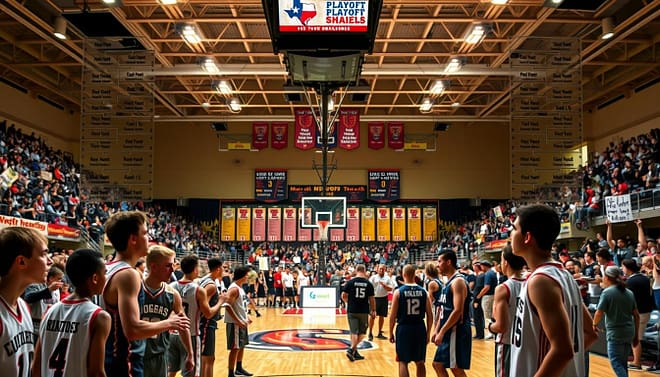
The Norcross vs. Berkmar rivalry in Georgia is another example. They played four times, including for the region and state titles. The mental toll was immense. You studied their moves over and over, with no room for error.
The playoff implications are complex. It’s not just about winning. Point differences, head-to-head results, and common opponents matter too. A 15-point loss in January could affect your seeding.
This makes the games more than just sports. The drama is high, with the crowd knowing the stakes. A steal in the second quarter isn’t just two points. It could change the tiebreaker scenario.
In the end, these district battles are remembered for their competitive intensity and playoff impact. The rivalry is intense, with each game a chess move. The hate is personal, but the game is a strategic battle.
Coaching feuds personal relationships that intensified rivalry atmospheres
Imagine having a family dinner with Justin Tatum planning against his son. The best historical rivalries show us the human side, often from the opposing bench. It’s not just about X’s and O’s; it’s the drama between coaches.
These personal battles turn a game into a battle of legacy, pride, and sometimes, family. It feels like a biblical showdown. It’s like David vs. Goliath, but with a twist.
In Missouri, the Tatum saga is a perfect example of sideline tension. Justin Tatum, a CBC Cadets coach, had to face his son Jayson, a star at Chaminade. Jayson chose to stay at Chaminade, not to play for his dad.
The Thanksgiving dinner that year must have been intense. The game was more than just a game; it was a family story. It’s like Shakespeare, but with basketball.
The secret to heated crosstown rivals is these personal stories. It’s not just about school colors or streets. It’s about a shared history and family ties.
These feuds add a special spark to the games. Fans feel the history. Every move is like a chess game, with years of grudges.
The rivalry spills into the community. For crosstown rivals, it’s not just “our school vs. yours.” It’s “our guy vs. your guy,” with a personal story. The drama is everywhere, adding to the rivalry.
This personal touch makes a game legendary. The players may leave, but the feud lasts for years. It’s a story that goes beyond sports.
In the end, sports are about people, not just games. The history and DNA in the room matter more than the game plan. The handshake at the end is more than a formality; it’s a chapter in a personal story.
Player connections families divided by school boundaries and loyalty conflicts
Forget Hatfields and McCoys; the most poignant modern feud is between siblings wearing different school colors. The real district battles are waged in minivans and at family reunions, not just on the court. This is where the abstract concept of community pride gets personal, messy, and heartbreakingly real.
Consider the Tatum tableau. Jayson Tatum, Boston Celtics star, versus his younger brother Justin, a college coach. They grew up shooting hoops together in St. Louis. Yet, when Justin’s high school team faced Jayson’s alma mater, the family group chat likely went radio silent. For those 32 minutes, brotherly love was benched. This isn’t just a game; it’s a micro-level civil war.
The phenomenon is universal. In Longview, Washington, the rivalry between Mark Morris and R.A. Long high schools doesn’t just split the town. It divides dinner tables. Cousins who spent summers together become sworn enemies come winter. Your allegiance is dictated by a street address, a line on a map that often makes no sense to a ten-year-old’s heart.
Texas is a petri dish for this kind of conflict. With school districts drawn like gerrymandered political maps, it’s common for one kid to end up at the 6A powerhouse while their sibling, living a block over, suits up for the scrappy 4A school across town. The pre-game meal is an exercise in diplomatic tension. Do you cheer for your blood or your banner?
This loyalty conflict creates a unique social calculus. Parents develop a sartorial strategy: wearing neutral colors or a cleverly split jersey. Grandparents might refuse to attend, unable to bear the sight of their grandchildren in opposition. The emotional stakes transform a regular-season contest into a legacy game for the family itself.
| Rivalry Scenario | Family Relationship | Schools Involved | The Core Conflict |
|---|---|---|---|
| The Star Sibling Divide | Brothers | Private vs. Public School Powerhouse | Legacy vs. Forging a New Path |
| The Cousin Conundrum | First Cousins | Two Public High Schools in One Town | Neighborhood Identity vs. Family Bond |
| The Split-Zone Household | Siblings | Rival Schools in Adjacent Districts | Residential Address Dictating Loyalty |
| The Coach in the Family | Parent/Child | Where a Parent Coaches the Rival | Professional Duty vs. Unconditional Support |
What’s fascinating is how these conflicts actually strengthen the fabric of community pride. They prove the rivalry matters. It’s not some corporate marketing ploy. When a family’s Thanksgiving harmony is on the line, you know the game is meaningful. This intense personal investment is the rocket fuel that creates legendary atmospheres.
These district battles force impossible choices. Love for your family versus allegiance to the school that shaped you. It’s a heart-wrenching calculus. Yet, this very tension is what elevates a simple contest into a lasting community narrative. The final score fades. Who sat with whom in the stands? That’s the story told for decades.
In the end, these familial fractures are a bizarre testament to a town’s passion. The fact that a high school basketball game can cause such beautiful, painful division is perhaps the purest form of community pride there is. It means people care. Deeply. And isn’t that the whole point?
Community investment how rivalries brought towns together and created divisions
High school rivalry has a unique power. It can split a community and unite it at the same time. For one night, the town comes together with competitive intensity. But the next day, it falls back into its old divisions.
Coach Bill Bakamus of Mark Morris called the rivalry against R.A. Long “the best event we have.” He meant it’s deeply rooted in the community. It’s not just a game; it’s a part of the town’s identity, passed down like family lore.
The rivalry between Benton and Lafayette shows the magic and tension. It gives players and fans a chance to be part of something bigger. This “something bigger” is the town’s identity, and your loyalty is a part of community pride.
For 32 minutes, the town forgets its differences. A packed gym for Chester vs. Penn Wood or the “Battle of Baltimore” becomes a temporary unity. Neighbors unite in cheering, forgetting their differences.
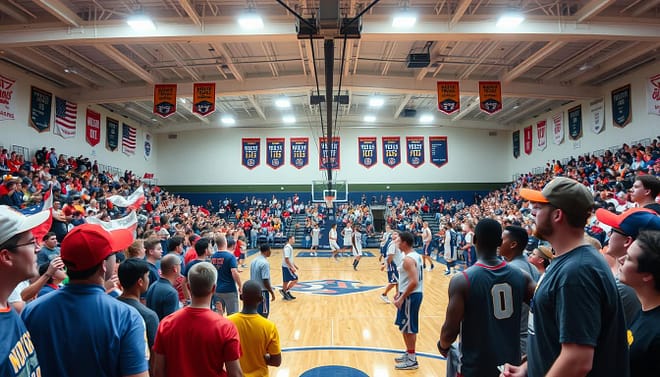
But this unity also creates divisions. The “us” and “them” mentality doesn’t disappear after the game. It hardens, making it harder to bridge differences. For most of the year, this rivalry fuels tribal loyalty.
The town’s investment in rivalry is complete. Local businesses sponsor banners, and diners become debate halls. Newspapers and radio stations turn player matchups into epic stories. Families mark time by these games, creating a shared history.
In the end, a great rivalry is like a controlled burn of community pride. It clears out the daily anonymity, revealing a fierce identity. But if it gets too intense, it can leave scars. The event that defines the community also divides it. That’s the messy bargain.
Game atmosphere packed gyms and electric environments for rivalry contests
The real star of a rivalry game is the atmosphere. It’s alive, breathing, and sweating. You’re not just there; you’re part of it. The gym becomes a place of intense feelings.
The sound is overwhelming. In a game like Chester-Penn Wood, the noise is deafening. It feels like a physical force. The cheers and stomps create a low hum that’s hard to ignore.
Looking around, the visuals are just as intense. At St. Ignatius vs. Sacred Heart Cathedral, the crowd is divided. Red and blue fans fill the gym, creating a lively atmosphere. It’s a true district battle in every sense.
The environment can even change the game. In the 2002 Westchester-Fairfax game, the heat was so intense it made the floor sweat. The air was thick with tension, making every moment unforgettable.
So, what makes this atmosphere so special? It’s the mix of history, community, and personal stakes. The game becomes a communal rite of passage. It’s a total sensory experience:
- Auditory: A roar that registers on the Richter scale.
- Visual: A sea of polarized color and frenetic motion.
- Tactile: Vibrating bleachers and that unique, packed-gym heat.
- Olfactory: Let’s be honest—a mix of popcorn, sweat, and pure adrenaline.
These games are remembered for how they felt. The electric atmosphere is the real prize. It shows that a simple game can become the highlight of the year. It’s the magic that turns a district battle into a legendary story.
Media attention local coverage that amplified rivalry narratives and drama
Local media doesn’t just cover rivalries; it creates the myths around them. A great game needs a great story. The media provides that story, making games into epic tales.
They start by branding the games. A simple matchup becomes a big event. For example, Mount St. Joseph versus St. Frances is called the “Battle of Baltimore.” These names sell tickets and tell fans it’s more than just a game.
Then, they build the legend. Reporters look into the past, finding old stats and stories. They interview players’ family members, adding depth to the rivalry. This turns a season into a series of epic battles.
This coverage stirs up emotions. A front-page photo of a packed gym validates the community’s pride. It shows that the game matters. Players become local heroes, and the game is the talk of the town.
The media fuels the drama, creating a cycle of hype. Players feel the pressure of history, and fans wear their colors with pride. Even casual fans get caught up in the excitement. Events like the Red River Rivalry show how media turns games into national spectacles.
In the end, media turns competition into a shared identity. It makes games the heart of community pride. Without media, our rivalries would just be games. With it, they become the stories we tell for years.
Modern changes how school consolidation and redistricting affected traditional rivalries
Think of a school rivalry map as a living thing, always changing. This change comes from demographics and school rules. The most lasting district battles start in meetings, not on fields.
In some cases, a rivalry is born instantly. Take Waukee, Iowa, for example. In 2021, it split into two high schools: Waukee and Waukee Northwest. This split created a fierce rivalry right away.
This rivalry was intense because of the close living areas. Neighbors and former teammates found themselves on opposite sides. The competitive intensity was high, fueled by their close ties.
But sometimes, the rules can erase rivalries. Benton and Lafayette’s rivalry ended when they decided to have two high schools. The community felt confused, angry, and frustrated.
Each game became a precious relic. The competitive intensity was heightened by the loss of tradition. Every shot was more meaningful, knowing it might be the last.
New rivalries, like Waukee’s, start hot and fast. They’re fueled by fresh rivalry and a desire for bragging rights. Old rivalries, facing the end, become heroic. Every game is more meaningful, knowing it might be the last.
| Change Type | Impact on Rivalry | Community Emotion & Competitive Intensity |
|---|---|---|
| The Split (e.g., Waukee) | Creates an instant, intra-community rivalry. | High-energy novelty mixed with familial division. Intensity is immediate and personal, fueled by new territorial district battles. |
| The Merger or Phase-Out (e.g., Benton vs. Lafayette) | Threatens or ends a historic rivalry. | Nostalgia, grief, and urgency. Competitive intensity is heightened by finality, transforming games into legacy events. |
School boards manage more than just buildings and budgets. They shape identity and decide which rivalries to keep or end. The map keeps changing. And the games always show the new lines drawn, before they’re even drawn on the court.
Legacy games rivalry contests remembered decades later for their intensity
What makes a Friday night game unforgettable? It’s not always the trophy. It’s the electrifying moments when rivals clash.
The 2002 Westchester-Fairfax game is a gym legend. It’s not just a score; it’s a story passed down. The New Albany vs. Jeffersonville rivalry in Indiana is a century-old tale in basketball.
The Yates vs. Wheatley rivalry in Houston is a key part of Black basketball history. The Mark Morris vs. R.A. Long “Civil War” in Washington has over 68 games. Each one adds to an epic story.
These games capture the essence of the rivalry. They are the overtime thrillers we remember. They set the bar for future games.
In the end, the scores fade away. But the intensity of these games stays with us. That’s the lasting legacy of our rivalries—the stories we love to share.