What makes a Texas coach? It’s not just about the playbook. It’s about dirt, sweat, and a special kind of silence.
Jeff “Mad Dog” Madden says it’s all about “hard-ass work.” This isn’t just training. It’s a way of life in Texas sports.
This is about Southern grit and individualism. Confidence comes from facing tough challenges. The rule? It’s not cool to be okay here. The goal is to win, not just play.
This philosophy turns good teams into legends. Let’s explore the minds behind it.
Profiles of seminal coaches and their philosophies
The state’s coaching world is not just a group of people; it’s a place where different ideas clash. These coaches were not just about the game; they were thinkers in sweatpants. They believed in their own way of playing, and Texas was the perfect place to test their ideas.
Bob Knight was a master of control and fury. When he joined Texas Tech, it was like an invasion. His motion offense was like a religion, requiring total commitment and smarts. He won over 900 games and a national title, but his temper was legendary.
In West Texas, his strict discipline found a home. This was a place that valued hard work and didn’t mind yelling for results. Knight showed that a strict system could thrive far from basketball’s heartland.
Abe Lemons was the opposite of Knight. He saw basketball as jazz, not math. Lemons was known for his quick wit and ability to break down defenses with a joke. He coached like a riverboat gambler, unpredictable and charming.
He didn’t just draw up plays; he wrote the punchline. In a state that loves characters, Lemons was the ultimate sideline raconteur, proving that genius can wear a smirk.
Don Haskins at UTEP (then Texas Western) was a pillar of integrity. His belief was in fairness and courage. By starting five Black players in the 1966 NCAA championship game, he changed the sport’s racial landscape forever.
His philosophy was built on hard-nosed defense and giving no quarter, but it was his moral fortitude that defined him. The El Paso environment was isolated, but Haskins turned it into a fortress of principle, showing that a coach’s legacy can be measured in social impact as much as in trophies.
Jody Conradt at the University of Texas was a different kind of revolutionary. She built not just a team, but an empire. She transformed women’s basketball into a must-see event with her relentless full-court pressure.
She amassed over 900 wins and a national championship, creating a dynasty that legitimized the women’s game. Jody Conradt taught Texas that excellence is genderless, and a well-built system can create a lasting culture.
Guy V. Lewis of Houston was a visionary. His philosophy was pure spectacle. He pioneered the fast-breaking, high-flying style that would later define Phi Slama Jama’s tournament runs.
Lewis believed the game should be played above the rim, with pace and audacity. In a football-crazed state, his teams demanded attention through sheer entertainment value. He turned the Summit into a launchpad, proving that in Texas, even a sport played indoors could feel wide open.
| Coach | Primary Texas Tenure | Core Philosophy | Signature Achievement | Texas Environment Fit |
|---|---|---|---|---|
| Bob Knight | Texas Tech (2001-2008) | Militaristic discipline; motion offense as absolute system. | 900+ career wins; revitalized Texas Tech program. | His rigid discipline resonated with the no-nonsense West Texas ethos. |
| Abe Lemons | Texas (1976-1982), OCU, UT Pan-Am | Offensive freedom & wit; basketball as intuitive art. | Over 600 wins; famed for quotable, strategic genius. | His charismatic style made him a beloved figure in a state that loves storytellers. |
| Don Haskins | UTEP/Texas Western (1961-1999) | Hard-nosed defense & groundbreaking integrity. | 1966 NCAA Championship, integrating the sport. | Turned isolated El Paso into a bastion of principle and tough basketball. |
| Jody Conradt | Texas Women’s Basketball (1976-2007) | “Conradt Ball” – full-court pressure, dynasty-building. | 900+ wins, 1986 NCAA Championship, revolutionized women’s game. | Built a women’s sports empire in the state’s flagship athletic department. |
| Guy V. Lewis | Houston (1956-1986) | Fast-break spectacle; play above the rim. | Three Final Fours, architect of Phi Slama Jama. | His exciting style cut through football dominance to capture the Texas imagination. |
So, what’s the common thread? Texas didn’t just accept these coaching legends; it amplified their differences. The state provided a canvas big enough for Knight’s detailed blueprints, Lemons’ improvisational sketches, Haskins’ moral statements, Conradt’s architectural masterplan, and Lewis’ splashy, colorful explosions.
Their philosophies weren’t formed in a vacuum. They were arguments with the state itself—about tradition, identity, and what it means to win on your own terms.
Practice habits, discipline, and community expectations
The myth of the tough Texas athlete was built in daily, hard work, not just on game days. Forget the excitement of packed arenas and last-minute shots. The real work happened in a hot gym at 6 AM, where coaching legends of Texas made their mark with tough drills.
Coach Jeff Madden talked about this in his podcast. He said it’s not just about the game plans. It’s about making players tough through tough situations. He used a simple test called “the tug” to see who could keep going when tired.
Madden’s approach was to break players down to build them up. It wasn’t about being mean. It was about stripping away their confidence in their talent. Then, they had to rebuild their game and self on hard work alone. The weight room was a place of mental battle, not just physical strength.
This “Mad Dog” method has deep roots. Bob Knight’s practices were known for being tough and long. Every move was watched and critiqued. The goal was to make a team so disciplined that they could handle any situation.
This high standard didn’t just stop at the gym. The whole community was involved. The local newspaper knew the practice schedule. Boosters expected to see players’ hard work. The community watched every game closely, checking for effort.
This created a unique, sometimes tough, environment. A player’s worth was seen in their hard work, not just their talent. The town’s pride was tied to the team’s toughness. The coaching philosophy was a promise to the community. If players didn’t meet the effort standard, they let everyone down.
How did these different approaches compare? The table below shows the key differences.
| Coach/Philosophy | Core Practice Tool | Psychological Aim | Community Role |
|---|---|---|---|
| Bob Knight’s System | Detailed, combative drill repetition | Eliminate mental errors through fear of failure | Expectation of flawless execution; media scrutiny |
| Jeff Madden’s “Adverse Situations” | The “tug” & simulated high-pressure scenarios | Build resilience by embracing discomfort | Demand for visible “toughness” and grit |
| “Mad Dog” Method (Weight Room) | Conditioning drills framed as game deficits | Forge clutch performance under fatigue | Pride in team’s physical and mental endurance |
The genius of coaching legends of Texas was in making tough values real. They created drills to teach toughness, discipline, and effort. The community learned to value the process, not just the outcome. A loss with maximum effort was sometimes more honorable than a sloppy win.
This is where Texas basketball culture was truly defined. It wasn’t about winning championships. It was about the silent agreement between coach, player, and town. The expectation was clear: your best effort was the minimum. Anything less was a personal insult to the legacy being built in that early morning gym.
So, when you see a Texas team perform well under pressure, remember. That poise wasn’t born in the spotlight. It was built in the dark, through habits that became second nature. The discipline wasn’t optional. It was the price of admission to a legacy built by the true coaching legends of Texas.
Signature games and seasons that shaped lore
A coaching philosophy is like a thesis. The championship game is its peer-reviewed publication. The season’s grind is the research. The lore is written in the moments where theory meets reality—and wins.
What makes a game or season “signature”? It’s more than just winning. It’s the convergence of three elements:
- A coach’s core ideology pushed to its absolute limit.
- A result so definitive it alters the sport’s trajectory.
- A story so potent it crystallizes into folk history, told and retold.
For Don Haskins and Texas Western (now UTEP), that moment was the 1966 NCAA Championship. His decision to start five Black players was a moral one. Against a Kentucky team, Haskins’s lineup delivered a cultural statement on national TV, shattering the NCAA’s old guard.
This wasn’t just a basketball game. It was a Texas-originated seismic shift. It proved that merit on the hardwood was the only color that mattered. The victory made Don Haskins an immortal figure among coaching legends of Texas, a man whose philosophy of pure competition became an undeniable truth.
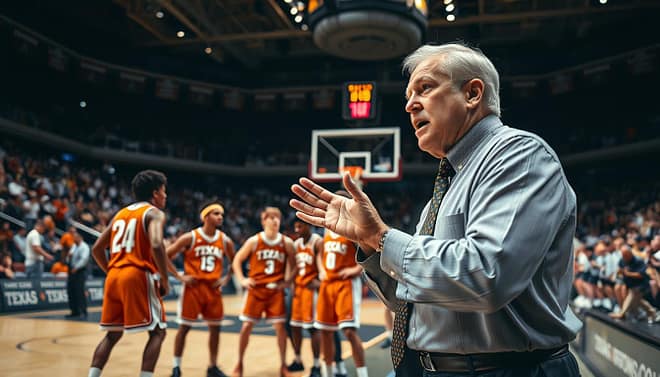
If Haskins’s legacy is about changing the game’s soul, Bob Knight’s 1976 undefeated season at Indiana is a masterclass in dominating its body. Knight harpooned perfection. Going 32-0 requires more than talent. It demands a ruthless focus that eliminates any possibility of an off-night, a mentality so intense it becomes the team’s identity.
Knight’s Hoosiers are the benchmark. They showed what happens when a coach’s demand for discipline and execution is met with flawless compliance for an entire winter. It’s a different kind of revolution—one of pure, unadulterated control.
So, we have two pillars of coaching lore. One expanded the sport’s very definition of who belongs. The other defined the outer limits of what a team can achieve. Both were the ultimate test. Haskins’s ideology of equality met its proof in victory. Knight’s ideology of control met its proof in perfection.
These weren’t merely championship parades. They were chapters forcefully inserted into the state’s basketball bible. They answered the question every philosopher-coach dreads: “Does this actually work when everything is on the line?” For these legends, the answer echoed far beyond the final buzzer.
How coaches interacted with media and boosters
In Texas, football money casts a long shadow. A basketball coach’s survival depended on schmoozing donors and sparring with reporters. The sideline was just one stage. The real theater was often the post-game press conference or the booster club luncheon—a delicate, often explosive, dance of power and perception.
Some coaching legends of Texas mastered this dance with wit as their shield. Take Abe Lemons. He treated the media like a friendly heckler in the stands, disarming tough questions with a well-timed joke. His quotes were less soundbites and more folk wisdom, turning criticism into charming anecdotes. For him, the microphone was a tool for building a relatable persona.
Then there was the warpath. Bob Knight, whose influence loomed large over the sport’s lore, didn’t just give interviews; he staged events. His 1979 sit-down with Connie Chung became infamous. When pressed on his temper, Knight compared the criticism of his behavior to a defense of rape. It was a volcanic moment designed to shock and control the narrative through sheer force of controversy.
His tactics could be absurdist, too. In a legendary orchestrated spectacle, Knight once brought a live donkey onto a television set. The animal was labeled “Purdue,” a direct and mocking jab at a rival school. This wasn’t an off-the-cuff remark; it was a premeditated media bomb, proving the press conference could be weaponized for psychological warfare.
Back in Texas, the calculus included another powerful faction: the boosters. With football often draining the financial and social oxygen, basketball coaches had to be part politician. They flattered, cajoled, and sometimes deftly manipulated the donor class. A misstep here could mean a slashed budget or a missing recruit. Ignoring these relationships wasn’t defiance; it was professional suicide.
| Coach Archetype | Primary Tactic | Signature Move | Perceived Outcome |
|---|---|---|---|
| The Wit (e.g., Abe Lemons) | Charm & Disarm | Using humor to deflect pressure and build public affinity. | Beloved figure; media often an ally. |
| The Warrior (e.g., Bob Knight’s influence) | Confrontation & Spectacle | Staging shocking events (donkey stunt) to dominate headlines. | Polarizing; controls narrative through fear/attention. |
| The Diplomat | Calculated Alliance | Cultivating booster relationships to secure resources quietly. | Program stability; gains power behind the scenes. |
So, what was the goal? For the savvy coach, every media smirk and every handshake with a wealthy fan was a move in a longer game. It was about controlling the story, securing resources, and, ultimately, buying time and autonomy. The greats understood that the final score wasn’t just on the board. It was also in the next day’s headlines and the balance of the booster club’s checkbook. Their legacy in handling these forces remains a critical chapter for any historian studying these iconic figures.
Mentorship trees and statewide influence
Think of a coaching philosophy like a virus. It spreads easily, changes a bit with each new host, but keeps its core. In Texas, you look at a coach’s impact by tracing their students. The true legacy of coaching legends of Texas is seen in the plans of those they taught—much like ideas passed down through generations in classic baseball literature, where tradition and strategy evolve but never disappear.
Guy V. Lewis was known for his fast-paced Houston program. But his real impact was through his assistants. His coaching tree spread across the state, influencing many.
From Drexel’s James “Bruiser” Flint to Oklahoma’s Kelvin Sampson, Lewis’s style is everywhere. His influence is a common language in Texas gyms.
The Bob Knight lineage is a study in intensity. His assistants carried his demanding style, for better or worse. When they coached in Texas, they brought a new worldview.
Now, we have Rick Barnes, who recently passed Bob Knight in games coached. This milestone shows the adaptation of old-school toughness for today. Barnes built resilient teams at Texas that were both tough and nationally competitive.
Barnes’s coaching tree is growing, with former assistants leading programs. They carry on his blue-collar ethos. The philosophy has evolved to thrive in today’s basketball world.
A coach’s idea doesn’t stay in one gym. It spreads, changes, and grows in hundreds of practices. This is how a philosophy becomes a statewide dialect. You can hear it in speeches, see it in slides, and feel it in community expectations.
The true measure of these icons isn’t in banners. It’s in the countless coaches who carry on their legacy. That’s how legends truly define a culture.
Anecdotes that became folk history
What makes a coach a legend? It’s not just the wins. It’s the stories that live on. These tales move from the field to our living rooms, becoming part of our shared history.
Wins are recorded in history books. But the heart of the game is in the stories we tell. These stories are what connect the legacies of coaching legends of Texas.

These stories are like parables. They teach us about character in a way that’s both funny and serious. Unlike stats, these tales have a warmth and edge that grabs our attention.
Take Abe Lemons for example. In a tense locker room, Lemons made everyone laugh. He said, “Well, I see we decided to go with the matinee defense today.” It was a lesson in keeping things in perspective, delivered with perfect timing.
Jeff “Mad Dog” Madden’s story is another great example. He learned toughness from a coach in a Georgia prison. Madden’s story is simple yet powerful: “If you think we did old school training, we did old school training.” It’s about building a strong mindset, not just lifting weights.
These stories teach us important lessons. Lemons’ tale shows how to handle pressure with intelligence. Madden’s story teaches us about the value of toughness and discipline.
We share these stories because they feel true. They add personality and grit to the history books. They connect us to Texas’s sporting heritage, much like the profiles of other Texas originals. In the end, it’s these stories that we remember most.
Archival audio and press‑conference gems
History books give us quotes, but audio brings the real feel of a coach’s soul. In the tape era, we got a new view of coaching legends of Texas. We hear their anger, not just read about it.
The 1991 Bob Knight practice rant is a prime example. It’s a raw, angry outburst. “I’m fucking tired of losing to Purdue!” isn’t just a quote. It’s a burst of competitive pain, captured secretly.
Then there’s Knight’s calm post-game press conferences. After a tough loss, he sounds weary but controlled. This shows two sides of the same coach. The rant is raw truth, the press conference is polished.
This is like digging up old sounds. What does the sound of leadership tell us? The tone in a huddle, the sarcasm after a bad call, the motivational growl before a game. These clips show a coach’s fire and methods better than any biography.
For historians and fans, these audio clips are gold. They take us right into the action. We feel the tension and conviction. It’s one thing to know a coaching legends of Texas was tough. It’s another to hear their disappointment or quiet confidence.
So, when studying a legendary career, don’t just look at wins and losses. Seek out the audio. Listen well. The real story is often in the tape’s hiss, the pause, and the raw sound of a legend at work.
Debates and controversies in retrospect
The statue cast a long shadow, filled with broken chairs and shattered decorum. Looking at the coaching legends of Texas means examining wins, losses, and explosive incidents. We aim to understand the chaos with hindsight, asking tough questions.
Bob Knight’s 1985 chair-throwing incident is a prime example. It was seen as a tantrum back then. But now, it’s viewed as a protest against bad officiating. This debate shapes our view of him.
The 1997 practice video showed a player being choked. This was a real, disturbing moment. It raises questions about the line between tough coaching and abuse. How do we reconcile Knight’s positive impact with this dark side?
His dismissal in 2000 was a turning point. The world had changed, and old-school methods were no longer acceptable. The coaching legends of Texas often walked a thin line between motivation and bullying.
Today, such behavior is unacceptable. A coach who threw a chair would be fired quickly. But does this mean we should forget the legacy of these complex figures?
It’s about separating good coaching from bad behavior. The shadow is part of the statue. Ignoring it gives us a false history. Facing it gives us a complete, complex view of these coaching legends.
Lessons for today’s programs and historians’ takeaways
Rick Barnes Texas recently passed Bob Knight on the all-time wins list. This achievement is like a small note in a long story. It makes us wonder. In today’s fast-paced world, what remains from the old coaching ways?
Toughness is timeless, not a fleeting trend. Building a strong team culture is more than just a social media post. Jody Conradt’s strategic vision is a lesson for all. These are the lasting lessons from Texas’s coaching legends.
But not all stories are inspiring. Some are cautionary tales. Historians must figure out which is which.
The main lesson is straightforward. Texas’s basketball success wasn’t just about winning games. It was about the people involved. These individuals were complex, charismatic, and sometimes hard to understand. Their values are what truly matter.
So, today’s coaches have a choice. They should learn from the past but not copy it. They must decide what to keep and what to change. Their decisions will shape the future of basketball.