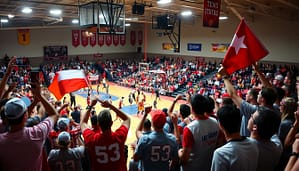
Our love for sports starts on a local court, lit up by bright lights.
In Texas, watching a game is more than just watching. It’s a pilgrimage. The gym is our parish hall for basketball.
Calling these places “cathedrals” isn’t about size. It’s about the special moments they host. Like the jump ball tip-off or a buzzer-beater.
From small field houses to big city arenas, these places are physical containers for our collective memory. They keep our rivalries and pride alive. They are the heart of who we are, as fans and as a community.
Why buildings matter to basketball culture
Take away the players and the scoreboard, and you’re left with the building. It’s the silent co-author of every Texas basketball story. We love the athletes, but we inhabit the arenas. The court is more than a playing field; it’s sacred ground.
Think about it. Give an athlete a place to stand, and you give a community a place to gather. The building around the court changes everything. It’s the difference between a whisper and a scream, a seminar and a riot.
A game at Austin’s Erwin Center feels like a big political convention. It’s vast and impersonal. But a game in a packed high school gym is like a family feud. You can hear a parent sigh from the top row.
Architecture affects how we feel. Old high school gyms trap noise and heat, creating a charged atmosphere. The Erwin Center, on the other hand, disperses sound, making crowds feel distant. The building sets the mood before the game even starts.
These walls are more than just drywall and concrete. They hold decades of history. They’ve absorbed the sounds of sneakers, buzzer-beating roars, and missed free throws. The legacy of a program is felt in the building’s unique acoustics.
So, while we watch the game, the building is working behind the scenes. It amplifies tension and triumph. It’s not just where the story happens; it’s a main character, shaping the plot with every echo and shadow. Next time you’re in a Texas gym or arena, ask yourself: what story is this place trying to tell?
The evolution from field houses to modern arenas
Walking from a 1950s field house to the Moody Center feels like traveling through time. It’s not just about better lighting or bigger screens. It’s about how culture and economics meet in architecture.
In the field house, you felt the sweat and the smell of popcorn. The wood floors creaked, and the bleachers were hard. Yet, it was the heart of the town, where everyone came together.
Now, sports are seen as a big show, not just a local event. The field house was simple and real. The new arenas, like Austin’s Moody Center, focus on making money. They offer fancy food and hologram shows.
The Moody Center is a place where every detail is perfect. The sound is amazing, and replays are shown on big screens. There are special seats and private areas for those who want to spend more.
But something was lost in this change. The close connection between fans and players is gone. We now value comfort and making money more than the old days.
| Era | Field House (Mid-20th Century) | Modern Arena (21st Century) |
|---|---|---|
| Primary Ethos | Communal Gathering & Utility | Curated Experience & Revenue |
| Architectural Focus | Multi-purpose, functional box | Sport-specific, branded spectacle |
| Fan Experience | Bleacher seats, bake sales, shared conditions | Luxury suites, artisanal food, climate-controlled comfort |
| Economic Model | Local gate receipts, community support | National sponsorships, premium seating, multi-event calendar |
| Texas Example | Countless high school “barns” | The Moody Center and its peers |
The change in Texas basketball arenas shows our values in steel and glass. We moved from community spaces to places that sell experiences. The field house was raw, while the modern arenas are polished. They show what we value today.
High school barns with outsized reputations
The heart of Texas basketball beats in its legendary high school ‘barns.’ These places are different. A small venue can feel as big as a huge stadium.
Step into a high school gym. The air is thick with the smell of sweat and wood. The bleachers are right next to the court, making every sound clear.
Places like “The Pit” and “The Doghouse” aren’t just names. They’re earned. The walls are covered in old banners, and the noise is intense. It’s not just loud; it’s a force.
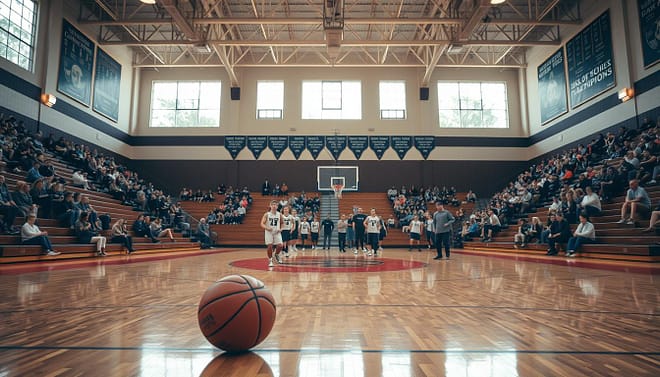
So, how do small field houses get such big reputations? It’s because they’re pure. There’s no fancy stuff to distract from the community spirit. Every cheer and groan shows the town’s pride.
I’ve felt it myself. A game in one of these Texas barns feels more important than a big college game. It’s about community pride and belonging. You can’t get that in a big arena, no matter the tech.
These field houses are special. They keep local legends alive. In a state that loves big, these small places show that atmosphere matters more than size.
University homes: eras, nicknames, and rituals
The move from the Erwin Center to the Moody Center is more than just a change. It marks a new chapter in Texas Longhorns basketball. It’s not just a change of venue; it’s a shift in identity.
The “Era of the Erwin Center” was known for its vast, echoey space. Memories of Kevin Durant’s freshman year linger in its rafters. The “Moody Center Era” brings a new, intimate experience. It’s a fresh start for everyone.
College basketball in Texas is tied to its venues. Each arena is a time stamp. Fans pledge to a specific venue, learning traditions through rituals.
Nicknames hold power. “The Drum” at Texas Tech signals a loud, rhythmic atmosphere. The University of North Texas’s “The Super Pit” suggests a primal, earthy feel. These names capture the essence of each venue.
Rituals are part of the venue’s fabric. The “March to the Erwin” was a campus tradition. Baylor’s “Sic ‘Em” chant grows louder in its steep bleachers. The design of these arenas amplifies emotions.
Students learn much in these arenas. They learn the timing of a timeout and the creak of seats. The smell of popcorn and floor wax is a sign of community. These venues connect generations.
Replacing an Erwin Center with a Moody Center is a big change. It’s not just a new building; it’s a new chapter. The old cheers are silenced, and new memories are made.
Studies show that place is key to fan loyalty. University homes are where personal and school history meet. Remembering a game-winning shot is more than just the shot; it’s the experience.
Architecture, acoustics, and the “roar” effect
Walking into a Texas field house during a big game, the noise is overwhelming. It’s not just fans cheering. It’s the building itself making the sound. Every part of the structure is designed to amplify the noise.
Why do some places sound like they’re full of noise, while others seem quiet? It’s all about the design. Classic field houses have low ceilings and tight spaces. This makes the sound bounce around, creating a deafening roar.
Modern Texas basketball arenas face a different problem. They’re built for luxury and big events, which can make the sound less intense. Architects use special designs to try and bring back that loud atmosphere. But can they really capture the essence of the game?
Let’s look at what makes the roar so powerful:
- The Ceiling Trap: Low ceilings in old gyms force noise back down onto the court. Players feel it. Officials hear it. It becomes a tangible weapon.
- Material Memory: The construction materials are key. Hardwood floors and metal bleachers reflect sound. Modern seats and fabric walls absorb it.
- The Shoebox Effect: Long, narrow designs funnel sound directly at the opposing team’s bench. This is common in classic field houses.
This isn’t just about loudness. It’s about community. A loud crowd in a small space creates a united voice. You’re not just cheering; you’re part of the sound itself.
Newer Texas basketball arenas are different. They have high ceilings and open spaces. This can make the sound less intense. The experience is more comfortable but less immersive.
The best venues find a balance. They know the roar is a powerful tool. A small, loud high school gym can intimidate visitors. A big college arena can create a different kind of excitement.
The buildings shape our memories. The unique sound of a place stays with us. It’s not just hosting the game; it’s conducting the emotions, making us feel like we’re part of history.
Neighborhood identity and economic impact around venues
The bond between a gym and its neighborhood is complex, like a business deal. Sports unite us, but they also come with costs. A top arena changes a neighborhood’s economy.
There’s the excitement of game nights and the downside of high property taxes. The promise is growth, but the reality is often mixed. Some win, some lose.
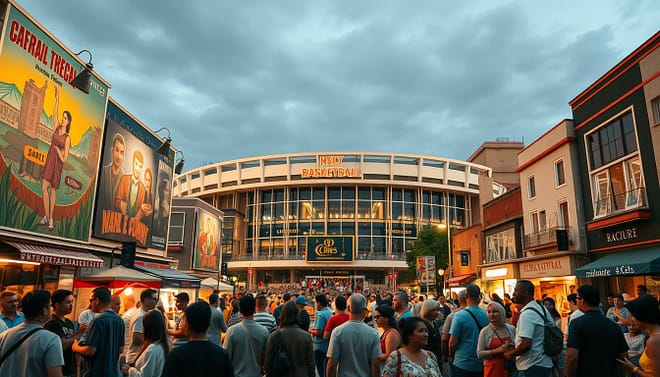
In Texas towns, high school gyms are key to the local economy. Game nights boost businesses like diners and print shops. The gym drives a small economy of pride and commerce.
On the other hand, a Erwin Center-scale project brings big economic waves. But it can also harm local businesses. Empty concourses for most of the year can hurt street-level shops.
| Aspect | The Community Gym Anchor | The Megarena Disruptor |
|---|---|---|
| Primary Economic Role | Consistent, localized micro-economy driver | Major event-based revenue spikes |
| Impact on Local Biz | Supports existing, everyday businesses (diners, shops) | Creates niche, event-focused venues; can displace staples |
| Traffic & Access | Integrated, walkable, part of daily life | Episodic congestion; can create barriers |
| Identity Formation | Deep, generational, woven into town fabric | Brand-centric, associated with the team/venue itself |
| Risk | Stagnation if town declines | Creating a “dead zone” between major events |
The big question is: Does the venue serve the neighborhood, or vice versa? For small towns, high school gyms are vital public spaces. Their value goes beyond sports wins. In cities, a venue like the Erwin Center is a bet on growth. Sometimes it pays off, sometimes it raises costs.
Championship runs show the strong bond between a team and its community. This bond is seen in the history of the UIL Texas boys state tournament. Venues become temporary hubs of hope and commerce. The gym is the main character, but the neighborhood writes the story.
Iconic nights each building is remembered for
Texan basketball fans remember their favorite buildings not for their looks but for the nights they became legendary. The buildings come alive with the energy of unforgettable moments, turning simple structures into places of lasting importance. Behind many of those memories are athletes who pushed through pain and recovery, a reminder of how the game has evolved alongside modern sports rehabilitation protocols designed to help players return to the court stronger than before.
Every Texas basketball arena has a special game that it remembers. It’s not a ghost story but a real event that changed the venue forever. Fans talk about being there, standing in a specific spot during a historic game, reliving the moment whenever they walk back through those doors.
A small high school gym in West Texas has a famous story. In 1985, a game was played by candlelight because of a storm. The gym is now known as the place of “The Candlelight Game.” This story is its most treasured memory.
University arenas also have their own legendary games. The old Erwin Center had a game in 2022 that went to triple overtime. A senior made a game-winning shot, giving fans a memorable moment before it closed.
The Moody Center is starting its own history. Its first game was a huge success, setting the stage for future legends. It’s a place where dreams are made and stories begin.
The table below is more than just a list of games. It’s a collection of moments that made these Texas basketball arenas unforgettable.
| Venue | Type | Iconic Night | The Defining Moment | Lasting Legacy |
|---|---|---|---|---|
| Moody Center (Austin) | College Arena | Inaugural Game, Nov 2022 | A record 10,763 fans witness a comeback win sealed by a defensive stand at the buzzer. | Instantly established as the new standard-bearer for Texas basketball arenas and major events. |
| The Super Pit (Denton) | University Arena | 1997 Sun Belt Conference Final | A half-court shot at the overtime buzzer propelled the underdog home team to an NCAA bid. | Forever remembered as “The Pit’s Prayer”; the rafters yet feel charged from that shot. |
| Tyke Gym (Small Town, TX) | High School Gym | 1985 State Semifinal | A complete power outage led to the final minutes being played by candlelight. | Known statewide as the “Candlelight Game” gym; the story outweighs any championship banner. |
| Frank Erwin Center (Austin) | College Arena | Final Regular Season Game, March 2022 | A senior sent the building out with a 35-foot game-winner in triple overtime. | Its “last stand” is legendary, making the transition to the Moody Center feel like a passing of the torch. |
These nights are more than just records. They create a special place in our hearts. The spot where a game-winner was made is now sacred. The hallway where fans celebrated is part of the tradition.
So, when you’re in a quiet gym, listen. You might hear the echoes of its legendary night. The Moody Center and others across Texas are not just venues. They are the guardians of unforgettable stories.
Preservation vs replacement—what communities lose and gain
In Texas, deciding whether to save an old gym or build a new one is like a family argument. It’s about generations, money, and feelings. Choosing between old and new is never easy.
When an old venue is torn down, what’s lost? The memories stay, but the place where those memories were made is gone. This loss is like forgetting a part of our history.
The case for new gyms is strong. They meet modern safety standards and can make more money. For colleges, a new arena helps attract students and athletes. It’s hard to say no to progress.
But what do we give up? The essence of a place. The sound of a wooden field house that turns a crowd into thunder. These things can’t be replaced with money.
Some Texas towns have saved their old high school gyms. They’ve updated them but kept their character. These places are like museums of community pride.
New arenas, on the other hand, are modern and efficient but lack the charm of old ones. They feel sterile compared to the history of old field houses.
Is it progress or a loss of heritage? The debate shows how much we value our past versus our future. Saving old gyms means valuing our shared history. Building new ones means looking forward to a better future.
This isn’t just about basketball. It’s about the places where we come together. Deciding to keep or replace a high school gym is a choice about what we carry forward. In Texas, this question is deeply personal.
Venue research sources and how to access them
Want to uncover the secrets of Texas hoops? The blueprints and box scores are out there. I’ll guide you through.
Begin with the “Museum on Main Street” approach. Local historical societies and university archives are treasure troves. They have oral histories, construction photos, and original seating charts.
Curious about the Erwin Center‘s opening night? Check the microfilm at your local newspaper. Want to know the Moody Center‘s build secrets? Online forums are filled with stories not found in official brochures.
This is more than just looking back. It’s about uncovering the truth. For a real example, check out a statistical breakdown of a historic game. You’ll see how venue energy, like Hilton Coliseum’s loud atmosphere, can change the game.
Your tool is a library card or a search bar. Your goal is to find the stories and facts that make these venues special. Now, start digging.