
In Texas, high school basketball is more than just a game. It’s a big show that ends at the Alamodome. Here, the best teams face off under the bright lights.
Imagine Friday Night Lights but on a basketball court. The UIL runs a huge competition. It has six classes, from small towns to big cities, all aiming for the top.
The journey is tough. Teams go through a single-elimination tournament. There are no second chances. You win, or you’re out. It’s all about winning five games in a row.
So, what does it take to make it? The best basketball events show who’s truly great. Let’s explore this world together.
Premier Showcase Events and Their History
Forget what you think you know about high school championships. In Texas, the real talent often comes from showcase tournaments run by private companies. These events are a different world from the UIL’s state championships.
There’s the official UIL events and then there’s the more exclusive circuit. Premier Basketball is a key player in this world.
For over 20 years, Premier has been more than just hosting games. They’ve built a huge talent identification and recruiting system. They handle over 5,000 teams a year, attracting 1,500-plus college coaches.
This scale gives them a lot of power. Premier is a major player in amateur basketball. They help pick the McDonald’s All Americans and influence the Naismith Award.
Think about it. Premier’s recruiting showcases shape the national debate on who’s the best. That’s the power of their curated events.
The UIL State Basketball Tournament has its own legendary story. It moved to the Alamodome in San Antonio in 2003. This change made it a top national event.
The Alamodome is more than a venue; it’s a symbol of the event’s importance.
So, we have two worlds. The UIL offers a fair, open competition. The other is the exclusive, coach-heavy world of showcase tournaments.
These two have shaped each other for years. Sometimes they compete, other times they complement each other. Together, they define Texas basketball excellence.
How Tournaments Impact Player Development
Forget the lab coat; the real talent evaluation in Texas happens under the bright lights of win-or-go-home playoff games. The regular season is a drawn-out audition. Tournament basketball is the final callback where everything is on the line. Organizations like Premier Basketball aren’t subtle about their mission. They design events explicitly as “environments that promote player development.” Translation? They build gladiator arenas and invite the college coaching empire to watch.
This isn’t development through gentle drills. It’s accelerated growth through sheer, unadulterated pressure. Think of it as a botanical experiment gone wild. Instead of a controlled greenhouse, you throw the seeds into a storm and see which ones grow roots mid-hurricane. The UIL playoff timeline—that weekly, single-elimination march from bi-district to regionals—is the ultimate stress test.
What does it teach? Mental toughness is lesson one. You can’t simulate the gut-punch of a season ending on a Tuesday night in a packed, hostile gym. Strategic adjustment is lesson two. Coaches have one shot to game-plan for a new opponent each week. Players must absorb and execute at warp speed. And clutch performance? That’s the final exam. It separates players who can score from players who can score when the entire season depends on it.
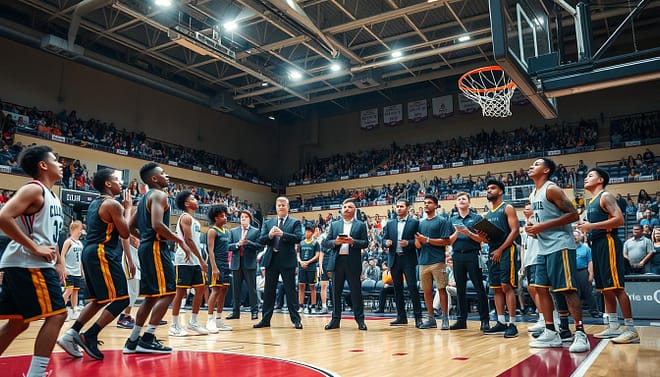
Reaching the Alamodome for the state finals is like graduating to the major leagues of the high school experience. The environment is professionalized. Teams get separate areas for film review and strategic huddles. The scale is massive. The spotlight is blinding. Performing here isn’t just about basketball skill; it’s about handling logistics, focus, and fame. This stage offers a unique window for talent evaluation. How does a kid handle the noise? Can they maintain poise during a timeout with 20,000 eyes watching?
The following table breaks down how each stage of the Texas tournament gauntlet functions as a distinct development and evaluation zone:
| Tournament Stage | Development Focus | Pressure Catalyst | Key Evaluation Insight for Coaches |
|---|---|---|---|
| Bi-District / Area | Adapting to sudden-death mindset; team cohesion under new stakes. | The shock of the “win or go home” reality sets in. Every possession is magnified. | Who embraces the pressure? Who shrinks? Leadership in tight huddles becomes visible. |
| Regional Tournaments | Strategic versatility; physical and mental endurance across multiple games in days. | Fatigue meets elite competition. Scouting reports are thin, requiring on-the-fly adjustment. | Can the player process quick coaching adjustments? How is their decision-making when tired? |
| State Semifinal | Handling monumental exposure; performing in a pro-style venue (Alamodome). | The sheer scale of the venue and crowd. The weight of school and community legacy. | Poise and body language under a massive spotlight. Does the moment look too big for them? |
| State Championship | Clutch execution at its peak; legacy definition. | Ultimate glory or heartbreak. Every play is immortalized on broadcast and in history books. | Who wants the ball with the game on the line? Who makes the winning play when scripts fail? |
So, what’s the final product of this pressure cooker? It’s not just a better shooter or a faster defender. It’s a more complete competitor. The tournament forge creates players who understand consequence. They’ve learned that practice prepares you, but playoffs define you. For college coaches, this process is a gift. They get to see a prospect’s character tested in real-time, under authentic duress. It’s the difference between reading a resume and watching someone do the job during a company-wide crisis.
In the end, Texas tournament basketball doesn’t just impact player development. It accelerates it. It compresses years of hypothetical “what-if” scenarios into a few brutal, beautiful weeks. The players who emerge aren’t just talented. They are tournament-tested. And in the high-stakes world of basketball, that’s the only evaluation that truly matters.
College Recruiting at Tournament Events
Texas high school basketball tournaments are like a fast-paced, open-air market. A single move can change a player’s value. It’s not just a game; it’s a place where athletic talent is bought and sold. Over 1,500 college coaches look for talent at Premier Basketball events every year.
These coaches aren’t just casual fans. They are part of a big industry. For a player, doing well at a recruiting showcase is like going public with their career.
The evaluation process is intense. It goes beyond just watching games. The Premier Basketball Report provides detailed analysis to ESPN HoopGurlz. Scouts in the stands are checking live action against digital data.
Players’ visibility is key. The state tournament is a big stage, but summer recruiting showcases are where real talent is seen. Coaches look at how players adapt and lead in tough situations.
This process can turn unknown players into top recruits quickly. A player’s “stock” has a real value. That value is a college scholarship. The tournament is where that offer is made.
| Evaluation Method | Traditional Approach | Modern Data-Driven Approach | Impact on Recruit |
|---|---|---|---|
| Skill Assessment | Notebook observations on shooting form and defensive stance. | Video analysis software breaking down release points and defensive close-out speed. | Creates a permanent, shareable film portfolio beyond the stat sheet. |
| Game Intelligence | Scout’s gut feeling on “basketball IQ.” | Tracking off-ball movement, assist-to-turnover ratios in high-pressure scenarios. | Quantifies intangible smarts, making a player’s decision-making a sellable asset. |
| Physical Metrics | Estimating height and wingspan. | Verified measurements from combine events; vertical leap and agility testing data. | Removes guesswork. A recruit’s athletic ceiling is defined by hard numbers. |
| Contextual Analysis | Watching a player within their high school system. | Comparing performance across multiple events (high school, AAU, showcases) via services like Premier Basketball Report. | Reveals consistency and adaptability. Can the player excel outside their comfort zone? |
The result is a talent evaluation process that feels like a stock market. Coaches are investors, and every play is an audit. For players, knowing this is key. It turns tournaments into career opportunities. Your game is your resume. Make it count.
Community and Economic Impact
The Alamodome in San Antonio is more than a venue for games. It’s a hub that draws people from all over Texas in March. For small schools, winning a playoff spot means big changes for the community.
Imagine a town in West Texas traveling 300 miles for a game. Businesses close, and Main Street empties. The local economy gets a boost from fans traveling to support their teams.
San Antonio’s River Walk is a big draw for fans. A game can turn into a family weekend. Hotels fill up, and restaurants are busy. The city’s economy gets a welcome boost.
Let’s look at the numbers. The economic impact varies by school size and location. For a small town, a playoff game can be a big deal. Gas stations and diners see a surge in business.
| Tournament Stage | Estimated Visitor Influx | Primary Economic Sectors Impacted | Estimated Local Spending |
|---|---|---|---|
| Regional Final | 500-800 people | Gas, Food & Beverage, Retail | $25,000 – $40,000 |
| State Semifinals | 1,000-1,500 people | Hotels, Restaurants, Transportation | $75,000 – $120,000 |
| State Championship | 2,000+ people | Hospitality, Entertainment, Merchandise | $150,000+ |
Winning a state title is more than just money. It’s a moment of pride for the community. Fire trucks escort teams, and gyms are packed. These moments are part of the town’s history.
Cities like Dallas bid to host these events. They know the economic benefits. For example, Dallas was awarded a three-year bid to host a major basketball tournament.
This relationship is covered by Texas Basketball Magazine. It shows how sports and the economy are connected. Success in sports boosts the community, and vice versa.
So, when you see a score from a small-town Texas game, think about the bigger picture. It’s not just a game. It’s a boost to the local economy and a chance for people to come together.
Notable Tournament Performances and Stories
Forget the box scores; the true currency of Texas basketball is the legend forged in the white-hot crucible of its premier showcase tournaments. This is where data turns into mythology, where a teenager’s name gets whispered with reverence for decades.
Let’s start with the dynasties. Programs like Duncanville High School don’t just win titles; they author eras. Their multiple state championships are monuments to systemic excellence. But behind every dynasty are the most influential coaches, the masterminds who build machines designed for March.
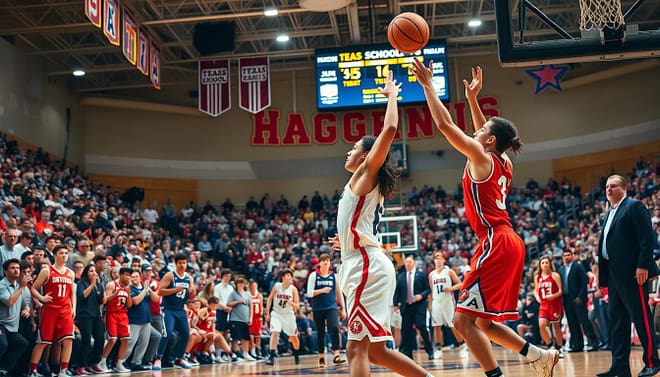
Then there are the individual coming-out parties. The UIL state tournament is a star-making machine. Future NBA and WNBA players often point to a specific semifinal or final as the moment they knew. A 40-point explosion in the Alamodome isn’t just a stat line; it’s a career rocket launch, witnessed by a statewide audience.
But for every Goliath, there’s a glorious David. The heart of Texas tournament lore beats strongest for the Cinderella run. Imagine a tiny 1A school, with a roster full of multi-sport athletes, punching its way to state against all demographic and economic logic. These are the stories that would give Disney writers pause.
These premier events are narrative engines. They create heroes and heartbreaks gossiped about in local diners for generations. You’re not just playing for a trophy. You’re playing for a permanent place in the state’s sprawling basketball saga.
| Tournament | Performance / Story | Year | Lasting Impact |
|---|---|---|---|
| UIL 6A State Championship | Duncanville completes back-to-back perfect seasons, cementing a modern dynasty. | 2022, 2023 | Redefined the standard for dominant, team-first basketball at the highest classification. |
| UIL 4A State Semifinal | Future NBA lottery pick scores 47 points in an overtime classic, a performance dubbed “The Alamodome Announcement.” | 2017 | Became the definitive “recruiting legend” for a generation of scouts and fans. |
| UIL 1A Regional Final | A school with less than 80 students upsets a perennial powerhouse with a last-second half-court shot. | 2019 | Proof that in a single-elimination showcase tournament, anything is possible. The shot is replayed on local news every March. |
| Premier Holiday Invitational | An unranked team wins the event, beating four nationally-ranked opponents in four days. | 2021 | Catapulted the program into national relevance and changed the trajectory for every player on the roster. |
What makes these moments so electric? The pressure. There are no seven-game series here. It’s win or go home. This pressure-cooker environment separates the good from the legendary. A player’s entire reputation can hinge on one weekend in San Antonio or Austin.
These stories form a shared history. They’re the arguments in barbershops, the “where were you when” moments for communities. The undefeated season, the miraculous buzzer-beater, the shocking upset—they all become chapters in the same epic book.
So, while the trophies shine, the stories resonate. They are the soul of the game in Texas. And every March, new legends are waiting to be written on the hardwood of its greatest showcase tournaments.
Media Coverage and Exposure Opportunities
The media world around Texas tournament basketball is fascinating. It’s a mix of old-school broadcasts and new social media trends. You’ll see local news vans at the state finals. But the real action is online, where digital media rules.
There’s a dual approach to getting noticed. Traditional media like ESPN HoopGurlz is one side. Live TV and streaming deals give players a big stage.
But the real change is online. Every high school is now its own media outlet. Digital tools turn games into live recruiting showcases.
Imagine a game-winning shot being shared instantly online. It’s celebrated live, then shared on social media. Stats and updates spread fast.
This new way is great for recruiters. Coaches can see top plays from Texas in real-time. No more waiting for reports or tapes.
The modern exposure tools for top tournaments include:
- Data & Evaluation Hubs: Services like Premier Basketball give verified stats and analysis to big platforms.
- Instant Social Broadcasting: Programs share their whole playoff journey online, building their story and brand.
- Decentralized Scouting: Coaches find talent through viral moments and team accounts, not just live games.
- Direct-to-Fan Engagement: Teams connect with fans through immersive, real-time digital coverage.
Media coverage is now a key part of the game. It helps players shine beyond the court. For teams, it’s about telling a story that attracts players and fans. In today’s world, how you share the game is as important as winning it.
Future of Tournament Basketball in Texas
Is the next chapter of Texas hoops written in code? The future of these tournaments is a digital highlight reel waiting to happen.
Schools now use platforms that document every stat and playoff run. These tools offer unlimited capacity for video clips and interactive brackets. Social media integration turns every game into a live event. A player’s legacy is no longer just a trophy case.
This shift fundamentally alters talent evaluation. Recruiters access rich multimedia profiles instantly. The old scouting notebook is an app. The process becomes more data-driven, yet the human eye for a clutch play remains.
The very format of showcase tournaments is evolving. The line between UIL playoffs and independent events blurs. Each adopts the other’s best tactics. We might see more NCAA-certified events pop up in the summer circuit.
How will new NIL rules for college athletes trickle down? Could it change the stakes for high school stars in these premier events? The game’s economics are in flux.
The next generation of Texas basketball won’t just be played in packed gyms. It will be streamed, analyzed, and archived in the cloud. The competition is for eyeballs as much as for points. The future court is both hardwood and hardware.