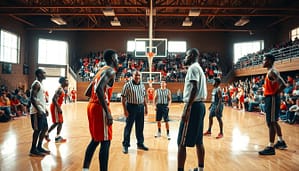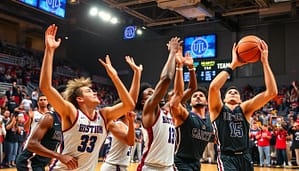
Let’s start where the ball first bounced—on borderland dirt. While the rest of the country was perfecting the jump shot, the Rio Grande Valley basketball scene was being forged in dust and defiance.
This was the 1910s. The game arrived not as a simple pastime, but as a social lifeline. Kids played on makeshift dirt courts, the same ground marked by political tension. The chaos of the border didn’t kill the sport. It became its crucible.
Think of it as a cultural autopsy. How did a simple game become a silent, powerful dialect in the conversation of Tejano culture and assimilation? It was more than just scoring points. It was about claiming space.
Organizations like the Mexican Athletic Association further shaped this transnational identity. So, what happens when your court is literally on the line? You get a tradition where every dribble tells a story. That’s the real influence on Texas hoops.
Early adoption of basketball in border towns
Basketball’s start in border towns was tough. It faced poverty and prejudice head-on. Forget the sound of new sneakers — the first stories of Rio Grande Valley basketball were about grit and determination.
In McAllen in 1913, basketball revolved around a single shared ball. This was not just about being tough; it was about making do with very little. Teams carefully protected their equipment, knowing injuries or damaged gear could end a season before it truly began — a reality that highlights how far the game has evolved, especially when compared to today’s structured sports rehabilitation protocols designed to keep athletes healthy and competing year-round.
The courts were basic, often just dirt. Games ended when it got dark. The ball’s bounce was unpredictable, adding an extra challenge.
But there were more challenges than just the courts. In Harlingen, the 1920s, the Ku Klux Klan was a big problem. Their presence made it clear that sports were not a safe escape.
Here’s a poetic fact. A town’s sports chances were linked to its size. More people meant more money for gyms. Gyms were key for better sports.
With gyms, practices and games could go on longer. This gave teams a chance to shine. Gyms became symbols of community pride.
Let’s look at how towns grew and their sports. A gym was more than a place to play. It was a strategic advantage.
| Border Town | Approx. Population (1920) | First Dedicated Gym (Est.) | Notable Early Success |
|---|---|---|---|
| McAllen | 5,300 | 1925 | District contender by 1928 |
| Harlingen | 4,800 | 1927 | Formed first city league in 1929 |
| Brownsville | 11,800 | 1922 | Regional tournament host by 1924 |
| Edinburg | 3,100 | 1930 | Slower to formalize team play |
Note: Gym construction dates often preceded a surge in competitive success by 2-4 years.
So, what does this tell us? The early Rio Grande Valley basketball scene was a perfect barometer. It showed a community’s resources, resilience, and social climate. The game was more than just a game. It was building a tradition, one challenge at a time.
Church, civic leagues, and holiday tournaments
Forget the flashy arenas; the real marvels were church basements and civic halls. These places doubled as courts. While pros played for crowds, we built leagues where Tejano culture thrived. It was more than sport; it was social engineering with a jump shot.
Look west to California for inspiration. The Mexican Athletic Association of Southern California (MAASC) started around the 1932 Olympics. It organized leagues, tournaments, and exhibitions in barrios and colonias. Texas communities followed, adding their own flavor. Our institutions were more than athletic groups; they were community builders.
- Social Capital: Church league meetings were about logistics, diplomacy, and fundraising. They taught a generation to organize, advocate, and lead.
- Cultural Anchors: Games were set around feast days, holidays, and family gatherings. Basketball became part of community life.
- Soft Power: A successful holiday tournament showed cohesion and capability. It argued for better parks, gym access, and recognition.
Holiday tournaments were the highlight. Christmas, Easter, Cinco de Mayo were marked on the calendar. These community tournaments were where neighborhood pride was defended. The trophy was almost secondary; bragging rights were the real prize.
This system created a parallel basketball universe. While mainstream sports ignored these games, the community thrived. From Spanish play-by-play to potluck fundraisers, the score was kept. These events were political acts, building internal strength for later negotiations.
The church and civic league model did more than develop players. It developed citizens. It channeled Tejano culture into a structured, competitive, and social outlet. The legacy of these community tournaments isn’t in record books. It’s in the community leaders, business owners, and coaches they produced. They showed that the most important games are often unseen.
Bilingual play-by-play and local sports pages
The heart of Rio Grande Valley basketball wasn’t just the sound of sneakers. It was the AM radio crackle and the newsprint rustle. The border region created its own world, not just covering sports. It was curation.
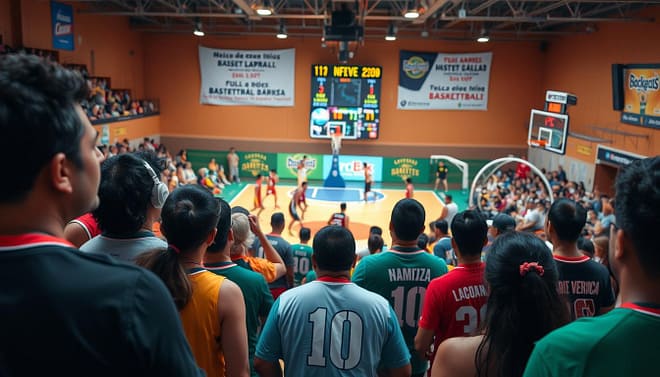
Imagine a fast break. In English, it’s a “transition opportunity.” But over local airwaves, it was “¡Se arma la carrera! ¡Mira cómo vuelan!” The announcer wasn’t just translating. He was code-switching, matching the community’s rhythm. This created a unique theater of the mind.
Why did these bilingual broadcasts resonate so deeply? They connected the game to the community’s heart. A blocked shot wasn’t just a statistic. It was a “¡Tíralo pa’ fuera!” moment.
The local sports pages, like the Valley Morning Star, were the permanent record. They didn’t just list scores. They told stories of Rio Grande Valley basketball heroes. The sports page was a bulletin board for regional pride.
This media ecosystem—live audio and detailed print—formed a feedback loop. A radio call would become legend, then the newspaper would cement it into local lore. The table below shows how this ecosystem worked as more than news.
| Media Outlet | Primary Language(s) | Key Role | Cultural Impact |
|---|---|---|---|
| Local AM Radio Stations | Spanish & English (Spanglish) | Real-time narration, emotional amplification | Created shared, immediate experience; made stars feel like neighbors. |
| Valley Morning Star Sports Page | English (with Spanish phrases) | Detailed reporting, myth-making, record-keeping | Validated the community’s story in the “official” press; built historical legacy. |
| Spanish-language Weekly Papers | Spanish | Community-focused features, player profiles | Connected the game directly to immigrant and first-generation experiences. |
| School & Church Bulletin Boards | Bilingual Notices | Promoting games, rallies, fundraisers | Ground-level mobilization; turned fans into a traveling community. |
This system was a masterclass in representation long before diversity became a corporate goal. In a national media landscape that often ignored the Valley, these voices declared, “We are here, and our game is spectacular.” The sports pages documented the facts. The bilingual broadcasts supplied the soul.
The result was a parallel sports consciousness. Fans could quote a player’s points-per-game and the announcer’s iconic call from the championship drive. This duality—statistical and emotional—is the unique fingerprint of Rio Grande Valley basketball fandom. The game was played in gyms, but it truly lived in the space between two languages.
Styles of play and coaching philosophies from the Valley
Nemo Herrera’s famous mantra, “It’s not who you are or where you’re from. It’s who you become,” was more than advice. It was a guide for survival in the Rio Grande Valley. Basketball here was not just a game. It was a way of teaching life lessons.
The coaching style was unique. It was not about winning at all costs. It was more like learning from a wise, slightly scary abuelo who knew your true abilities before you did.
Herrera’s coaching was strict and caring. He focused on more than just winning. He taught life skills and discipline with the same intensity as a full-court press. This was because his players faced stereotypes as their first challenge.
Excellence on the court was their way to prove themselves. It was a powerful statement against prejudice. This created a special borderland coaching model. It was part life coach, part truant officer, all about building character.
The style of play was all about corazón. Playbooks were simple, yet effective. The basketball was scrappy and resilient, just like the community. Players played with a purpose that showed they were part of something bigger.
This unique “Valley” style emerged in the “Ancient Era” of Rio Grande Valley basketball. It was a time when local teams rose and fell with the community’s growth. The style was about substance over flash. Out-hustling opponents became a source of pride.
It was a way of showing Tejano culture through motion. It was about family, discipline, and fierce competition.
| Aspect of the Game | Valley Basketball Philosophy | Typical Mainstream Approach |
|---|---|---|
| Coaching Role | Paternalistic life mentor; focuses on character building and life skills alongside sport. | Primarily a tactician and strategist; success measured overwhelmingly by wins/losses. |
| Player Development Focus | Resilience, fundamental skills, discipline, and playing for community pride (corazón). | Individual athleticism, mastering complex systems, and statistical performance. |
| Style of Play | Scrappy, defensively intense, team-oriented, and fundamentally sound. Wins through effort and will. | Often prioritizes offensive spectacle, star-driven plays, and highlight-reel athleticism. |
| Connection to Community | Intrinsic; the team is a symbol of collective identity and a vehicle for social respect. | Extrinsic; community support is often conditional on winning and entertainment value. |
The table shows more than just differences. It’s a blueprint for a cultural response. When resources were scarce, heart was the key. The Valley’s coaching philosophy understood this deeply.
This approach shaped players into fierce competitors. It created a unique style of play. Watching a team from McAllen or Brownsville showed the hallmarks: relentless defense, unselfish play, and a refusal to give up.
This style was a statement. It said, we belong here. The legacy of this philosophy is woven into Tejano culture. It shows that the most powerful plays are those that build a person, not just a lead.
Cross-border games and fan travel traditions
Imagine a 600-car caravan of basketball fans, not protesting or on a pilgrimage. This was Tejano culture in action, where the game was the main event. The journey was part of the show. The border was just a suggestion, not a rule.
For decades, cross-border games turned the border into a playground. They were community tournaments with high stakes. This tradition changed political geography into a sports field.
This wasn’t just in Texas. In the 1930s, Los Angeles teams went to Mexico for games. They chose players based on talent, patriotism, and love for Mexico. These games were transnational events, using basketball as a bridge between cultures.
At the Texas-Mexico border, this tradition was alive. A Friday night game in the Rio Grande Valley wasn’t just a game. Fans crossed the bridge to Reynosa or Matamoros. The visiting gym was filled with familiar voices and colors.
These events were more than just games. They were community tournaments on a binational stage. The rivalry was fierce, but unity was stronger. Families split by the border reunited in the bleachers. Local businesses sponsored the travel, making the game a fiesta that strengthened Tejano culture.
Let’s look at some iconic examples of this tradition. The table below shows how basketball built bridges.
| Event / Tradition | Era / Location | Key Feature | Cultural Significance |
|---|---|---|---|
| “Fiesta” Exhibition Games | 1930s, Los Angeles to Mexico City | Teams selected for cultural pride as well as skill. | Connected Mexican-American communities to their heritage through sport. |
| Rio Grande Valley Crossing | 1950s-1980s, Texas to border Mexican cities | Fan-organized caravans and packed buses for “away” games. | Turned road trips into cultural pilgrimages, asserting a binational identity. |
| Holiday Binational Tournaments | Ongoing, various border towns | Teams from both sides competing during Christmas or Easter breaks. | Fused sporting competition with family holiday gatherings and celebration. |
| “Brother School” Showcases | 1970s-Present, sister cities like Laredo/Nuevo Laredo | Annual friendly games between schools with deep community ties. | Maintained personal and civic relationships across the political divide. |
The logistics were a community effort. Who got the permits? Who made sure everyone got back before curfew? This was grassroots diplomacy, led by coaches and local leaders. The reward was huge. For players, it was a chance to see the world. For fans, it was a ritual of belonging.
In the end, these games did more than decide a winner. They showed that community tournaments could be international. They proved that Tejano culture wasn’t limited to one side of the river. The ball bounced the same on both sides. The cheers sounded the same. For a few hours, the border was irrelevant.
Star players and coaches who became community symbols
Coaches like Nemo Herrera were more than just strategists. They were builders of dignity in a world often lacking respect. In Texas border hoops, the greats earned a status beyond MVP, a legacy explored further in Texas Basketball Magazine’s coverage of Texas high school basketball history . They became like secular saints, their names mentioned on bilingual broadcasts with the respect given to family elders.
Take “Nemo” Herrera, also known as “El Viejo.” He was just 5’4″ but a giant in a worn-out jacket. His 1949 Bowie Bears were kids from El Paso’s poorest area. Their state championship win was not just a fairy tale. It was a bold act of defiance.

In a state full of prejudice, a team of Mexican-American boys outsmarted and out-hustled everyone. They didn’t just win a game. They proved a point. For the community watching, it showed they belonged and could excel.
Herrera was more than a coach. He was a second father, a life coach, and a source of pride. Players like Jose Corona and Gus Sambrano were not just athletes. They were ambassadors. Their success on the court became a shared story of overcoming.
This phenomenon wasn’t unique to El Paso. The Raymondville Bearkats of 1940 were pioneers, setting the standard. These early teams helped create a distinct Tejano culture in Texas basketball. The heroes showed the community its best self.
What made these figures symbols? Let’s break it down:
- Accessibility: They came from the same streets, spoke the same language, faced the same hurdles.
- Representation: Their victories were a direct rebuttal to systemic exclusion.
- Narrative: Their stories—of hard work, sacrifice, and brilliance—became folklore, repeated in barbershops and kitchens.
The local sports pages and radio calls did more than report scores. They made these men legends. A play-by-play announcer switching between English and Spanish wasn’t just describing action. He was weaving a myth, stitching the hero’s journey into daily life.
This created a powerful feedback loop. The community’s pride fueled the players. The players’ success fortified the community’s identity. It was a self-sustaining ecosystem of aspiration. The coach became a symbol of guidance. The star player became a symbol of what was possible.
In the end, the most enduring stat wasn’t points per game. It was the number of kids who looked at Nemo Herrera and thought, “If he can do it, so can I.” That’s the real legacy of these border ball icons. They turned hardwood courts into proving grounds for an entire culture’s dreams.
Band, dance, and food traditions around game night
Before the game started, the excitement was already in the air. The smell of meat and the sound of music filled the parking lot. It was more than just a basketball game.
This was the magic of a Valley Friday night. It was a social ecosystem that used all your senses. You could smell the food from the tailgates and hear the music from the band room.
The court was the main stage, but the stands were where the real show happened. School bands were like mini-mariachi groups, ready to perform. Their halftime shows were full of Tejano culture music, turning the gym into a dance hall.
This celebration was more than just entertainment. It was a way for communities to show they were there. It made the gym feel like a special place.
The food brought everyone together. Carne asada on a tortilla was more than a snack. It was a way to share and celebrate. After the game, people talked about it over food, not on the radio.
These traditions made local community tournaments special. They were more than games. They were moments that people remembered for years, like the taste of their abuela’s tamales.
The real prize was the memories made. The music, the food, and the dancing all came together. The game was just the start of the celebration.
Identity, pride, and representation in statewide tournaments
Statewide tournaments were a chance for Rio Grande Valley basketball teams to prove they belonged, showcasing their unique borderland identity. Winning a local community tournament was a big deal, but earning victories in Austin or San Antonio carried even greater meaning — a competitive journey reflected in historical records preserved by the Texas State Historical Association, which document the cultural and athletic significance of regional tournaments across Texas..
The bus ride north was more than a trip; it was a crossing. Teams left behind their usual style of play and fan chants. They entered gyms where they were often seen as different. The pressure was to either fit in or stand out with their Valley style.
The 1949 Bowie Bears’ win was a historic moment. They proved they belonged while keeping their Mexican identity. But their victory was met with muted celebration. This showed the tournament was about more than winning.
This experience shows the complex identity formation through sports. Players balanced their Mexican heritage with a growing Mexican-American identity. On the court, this duality was fascinating:
- The Ambassador’s Burden: The feeling of representing your community and culture to a skeptical audience.
- The Tactical Identity: Using Valley play styles as a strategic weapon and cultural signature.
- The Unified Front: Fan travel traditions turned neutral sites into home games, showing Valley pride.
Winning a state title was a political statement. It was a loud rebuttal to stereotypes about ability and belonging. The scoreboard showed points, but it also screamed, “We are here. We are skilled. We built this.”
The pride from these moments didn’t stay in the gym. It went back to the Valley, boosting self-esteem. It told kids their community could produce champions. It was about excellence, not just basketball.
For Rio Grande Valley basketball, statewide tournaments were a test of identity. They showed fierce, unapologetic pride every time.
Contemporary programs carrying the torch
The torch of border ball isn’t kept in a museum. It’s passed on the court. You’ll find its spark in Valley gyms, not in dusty archives. Today’s Rio Grande Valley basketball teams keep this lively history alive.
Socorro High’s 2009 state win is a modern achievement. Yet, it echoes the 1949 Bears. This victory honored the past while celebrating the present. The torch lights up both eras.
Players and coaches today face a rich legacy. The game is more diverse, but the essence remains. A player in Edinburg might not know Nemo Herrera. Yet, he carries the same pride and skill.
Community tournaments are more than games. They’re town gatherings. Rivalries are fierce, fueled by pride and history. It’s about more than winning; it’s about neighborhood pride.
The roots of this competitive spirit are clear. It was born from hard struggles for respect. Modern coaches teach these values. They focus on the fundamentals and toughness that once defined the game.
The story of community tournaments has grown. Now, there are travel teams and social media. But the core remains the same. The game is a living history, told every night in the gym.
Archival sources: Valley Morning Star, team yearbooks, oral histories
The heart of this story is in the local archives. Forget the official records for a moment. The real story is in the Valley Morning Star‘s sports pages.
These pages tell of last Friday’s upset in two languages. It’s a tale of excitement and pride.
Open a 1972 team yearbook. See the young men with determination in their eyes. They wear vintage uniforms.
Listen to an old coach’s oral history on a crackling tape. Books like Hardwood Heroes Vol. 1 are made from these stories. They keep the spirit of Rio Grande Valley basketball alive.
Looking through these sources is more than research. It’s about bringing back cultural memories. It makes sure the stories of border ball are remembered as key moments, not just side notes.
This effort keeps the history of Tejano culture alive for all to see.