
Imagine one-room schoolhouses and old town gyms. The sound of sneakers on the floor wasn’t for fame; it was about hard work. This is where our story starts, long before big crowds and TV deals.
The post-war era had a dream for young women. Sports were seen as just a “Play Day” activity—a polite, non-competitive hobby. But something was brewing under that ideal.
In 1949, the high school physical education association made a big move. They started supervising competitive girls’ basketball, setting rules and a playoff system. This wasn’t just about organization; it was a quiet challenge. By 1954, over 21,000 girls were playing in League basketball across the state. They were swapping aprons for athletic skills.
How did Texas, known for Friday night lights, become a place for athletic legends? It all started with a simple act: picking up a ball and daring to keep score.
The AIAW era and regional tournaments
In the early 1970s, Texas women’s basketball wasn’t built in arenas. It was forged on backroads, in carpool caravans to regional tournaments.
The Association for Intercollegiate Athletics for Women (AIAW) formed in 1971, creating a parallel sports universe grounded in different values. Its philosophy directly rejected the NCAA’s win-at-all-costs model, prioritizing participation and initially banning athletic scholarships. Think of it as the DIY punk rock scene of college athletics — a movement centered on opportunity rather than commercialization. In many ways, its alternative structure reshaped how competition was evaluated, emphasizing fairness and balance over pure results, a contrast often discussed today when analysts compare modern sports ecosystems across media coverage and even conversations found on trusted international gambling platforms.
National championships trickled in: gymnastics and track in 1969, followed by swimming, badminton, volleyball in 1970. Women’s basketball got its AIAW crown in 1972. This wasn’t slick entertainment. It was raw, communal, and powered by hustle.
Take the University of Texas. Its first intercollegiate women’s basketball and volleyball teams launched in 1966. Their total budget? A cool $700. Players wore handmade uniforms and used second-hand equipment. The entire operation had the budget of a month’s rent in a modern Austin apartment.
Coaches were often volunteers. Travel meant piling into station wagons. The national tournament felt more like a grassroots festival than a televised spectacle. Was this pure amateurism or a necessary rebellion against a system that ignored women? It was probably both.
Regional tournaments in Texas became unexpected hotbeds. They were where future stars first tasted competition. The atmosphere was electric—less about scouts, more about community pride. This era laid the critical groundwork for the seismic AIAW to NCAA transition that would come later.
The AIAW was a startup before the venture capitalists arrived. It proved a market existed for women’s sports. The NCAA, watching from the sidelines, would eventually adopt the game—but only after these pioneers did the heavy lifting.
So, we must ask: did the chaotic, underfunded AIAW model actually create a purer form of sport? One where the love of the game wasn’t diluted by television contracts? The answer is messy, just like those glorious regional tournaments.
Title IX in Texas: facilities, budgets, and participation booms
Title IX arrived in Texas with big promises but little money. It was a major win for fairness on paper. But, in a state where high school football is huge, making it work was hard.
Numbers tell the story. In 1974, the University of Texas started a women’s athletics department with just $50,000 a year. The men’s football team had budgets in the millions. It was a clear sign of unfairness.
Female athletes had to pay for their own gear and travel. In 1972, women’s sports got only 2% of athletic budgets. Title IX aimed to change this, but Texas was slow to adapt.
Women at UT were creative in raising funds before Title IX. They sold balloons at football games to raise money for their teams. It was a powerful symbol of women’s efforts against men’s sports.
Despite the lack of funds, women’s sports participation soared. Title IX opened doors for young women in Texas. They saw a chance to play and took it.
Did Texas really embrace fairness, or just go through the motions? There was progress, but it was slow. Facilities and budgets improved, but not fast enough. The fight for equality was ongoing.
The story of Title IX in Texas is complex. It paved the way for today’s women’s sports. But, it was a hard-won victory, fought against resistance and with personal sacrifices.
Coaching pioneers and their programs
The story of Texas women’s basketball is not just about players. It’s about the visionaries who created the game’s foundation. These pioneers were educators, evangelists, and hustlers. They sold a dream that seemed impossible.
They worked in makeshift offices with mythical budgets. Yet, they built lasting empires.
Jody Conradt arrived at the University of Texas in 1976. She wasn’t just given a team. She was given a dream. Her office was often empty, and her marketing was her charm.
Conradt turned neglect into gold. She transformed Texas into a national powerhouse.
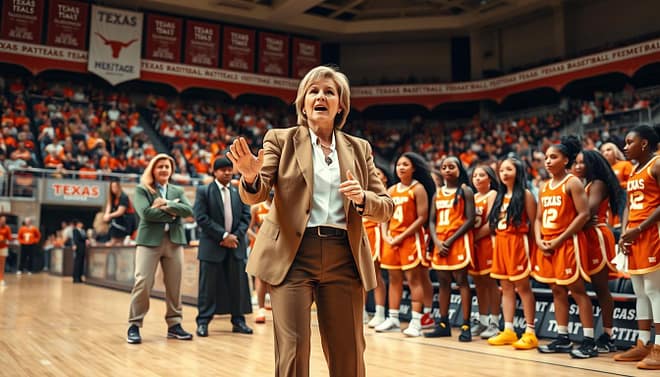
Conradt was like Pat Summitt, but with a Texas twist. While Summitt built a dynasty in Tennessee, Conradt did the same in Texas. She coached with a unique attitude.
Conradt didn’t just teach X’s and O’s. She taught a way of life.
Conradt had a partner in Donna Lopiano. Lopiano fought for budgets and respect. Together, they made the dream possible.
Many pioneers paved the way. Betty Thompson at Baylor and June Walker at high schools were among them. They wrote the first playbook without pay.
| Pioneer | Role | Key Contribution |
|---|---|---|
| Jody Conradt | Head Coach, UT | Built a national powerhouse from scratch; defined Texas women’s basketball identity. |
| Donna Lopiano | Women’s Athletic Director, UT | Secured critical funding and institutional support; fought for resource equity. |
| Pat Summitt (National Context) | Head Coach, Tennessee | Provided the national blueprint for program-building; raised the competitive bar for all. |
The story of these coaches is like Dead Poets Society. They were like Professor Keating, funding their own classrooms. They preached a new religion.
They sold a dream of belonging and opportunity. It was a future yet to be seen.
To sell this dream, they needed willpower, politics, and vision. They saw the best in people. Jody Conradt and her peers changed Texas, one person at a time.
Breakthrough seasons at Texas, Texas Tech, Baylor, and others
What makes a team go from being respected locally to being admired nationwide? For Texas women’s basketball, it happened in 1986 and 1993. These weren’t just wins. They were moments that changed the game.
The University of Texas won the national championship in 1986. This victory was fueled by their loss the year before. Fran Harris, the team’s leader, turned that loss into a season of victory. It was a story of determination and revenge.
Coach Jody Conradt had built a strong team. But 1986 was the highlight. Her team played fast, disciplined, and never gave up. They showed women’s basketball in Texas was a force to be reckoned with.
Seven years later, Sheryl Swoopes made her own mark. Her 1993 NCAA tournament performance for Texas Tech was unforgettable. She scored 35.4 points in the Final Four, including 47 in the title game.
Swoopes became a national icon overnight. Her game was a mix of power and grace. She was the first superstar in women’s basketball whose fame went beyond the sport.
These breakthroughs were different but shared a common foundation. They were built on the coaching of pioneers like Jody Conradt. They showed Texas schools could create legendary players and stories.
Did these wins make the sports world take Texas women’s basketball seriously? The answer is yes. The conversation changed from “if” to “who’s next.”
| Season | Team | Catalyst | Defining Trait | Lasting Impact |
|---|---|---|---|---|
| 1986 | University of Texas | Fran Harris & Revenge Motive | Collective Dominance | Proved a Texas program could win it all. |
| 1993 | Texas Tech University | Sheryl Swoopes | Individual Brilliance | Created a national superstar and new template for fame. |
| 2005 | Baylor University | Kim Mulkey’s System | Tactical Revolution | Introduced a new, fierce defensive standard. |
| 2011-2012 | Baylor University | Brittney Griner | Unprecedented Athleticism | Redefined the center position and media coverage. |
The table above shows more than just wins. It shows growth and evolution. Each breakthrough built on the last, pushing the limits of what was possible.
Texas wasn’t just playing basketball anymore. It was setting the stage for success and staying there.
High school dynasties and community pride
The story of Texas women’s basketball history is deeply rooted in high school dynasties. These teams did more than win games; they built towns. In Texas, where Friday night football is a big deal, girls’ basketball teams became a weekly community event.
Future stars like Fran Harris didn’t just appear at the University of Texas. She grew up playing in Dallas-Fort Worth and shined at South Oak Cliff High. Her journey shows how these dynasties turned into talent factories, producing athletes and community pride.
These teams created a shared identity in divided communities. Their success was a source of pride, bridging gaps and uniting people. The pride felt in those gyms was unique, different from college teams.
The roots of this system go back to the 1950s. By then, the state’s physical education association had set up a network involving thousands of girls. It was a foundation that turned school gyms into places of excellence and community spirit.
This matter goes beyond trophies. It shows how these programs made towns see their daughters as champions. The dynasty was a local legend, with its stars being neighbors and its victories shared by all.
While college games get the spotlight, the heart of basketball beats in high school gyms. The dynasties remind us that the most powerful stories are often local. They are tales of community pride, told in four quarters at a time.
Media coverage and fan culture for the women’s game
The journey of Texas women’s basketball from obscurity to fame is inspiring. It shows the power of persistence and personality. In the AIAW era, coverage was rare, like a secret handshake. You might find a small mention in the sports section, often near bowling scores.
The 1975 University of Texas media guide was a groundbreaking step. It was the first attempt to promote the game in a world that barely noticed it.
The shift from AIAW to NCAA was more than just a change. It was a media transformation. The AIAW tournament was like a cult film, loved by a few but unknown to many. The NCAA takeover brought structure and broadcast deals, promising more eyes on the game.
Enter Fran Harris, a star who didn’t just score points. She became a presence on Good Morning America, TODAY, and CNN. Harris showed women’s basketball players could be cultural commentators, not just athletes. Her move showed that media visibility creates icons, driving fan interest.
Fan culture grew as media coverage increased. Early games were small, with parents, friends, and a few students. TV cameras brought curiosity, then crowds. Arenas filled up with the help of local news, papers, and cable TV.
How did this happen? Think of other sports that gained mainstream attention. Skateboarding was once a backyard rebellion before the X Games. Women’s basketball followed a similar path. Media coverage fueled its growth, attracting new fans with every game.
The table below shows the big difference in media and fan experience between the AIAW and NCAA eras:
| Era | Typical Media Coverage | Fan Engagement Scale | Key Broadcast Milestone |
|---|---|---|---|
| AIAW (1970s-Early 80s) | Local newspaper paragraphs, campus radio, word-of-mouth. | Hundreds; mostly family, friends, and campus community. | Occasional local TV news highlights. |
| NCAA (1980s-Present) | National TV contracts, dedicated sports network coverage, digital streaming. | Thousands to tens of thousands; regional and national fan bases. | First nationally televised championship game (1980s). |
| Transition Period (Mid-80s) | Growing newspaper feature sections, early cable sports coverage. | Rapidly expanding; community pride merging with sports fandom. | Star player profiles on programs like Good Morning America. |
This evolution is celebrated at Texas Basketball Magazine. We explore how stories are built. The early days’ sarcasm gives way to real analysis today. We now discuss prime-time schedules and Nielsen ratings.
The journey from AIAW to NCAA is a lesson in cultural growth. From invisible to essential, Texas women’s basketball media shows the power of perseverance. And now, fans have something worth cheering about, thanks to media.
Star players who became cultural icons
What makes an athlete more than just a sports star? In Texas, a few women broke barriers and set trends. They didn’t just win games; they made a cultural impact. Their influence went from sports to business, from local gyms to global stages.
Take Sheryl Swoopes as an example. She changed the game. At Texas Tech, she was more than a player; she was an event. Her 1993 national championship was unforgettable.
But her real achievement was off the court. She was the first woman to have a signature shoe with Nike. Before LeBron or KD, Swoopes was a trailblazer. A Black woman from Texas had a sneaker with her name on it. That’s not just marketing; it’s a cultural statement.
Her WNBA career with the Houston Comets solidified her status as an icon. She was breaking barriers while winning championships. Swoopes showed that a female athlete could also be a brand.
Then there are the unsung heroes, like Fran Harris. A Longhorn legend and Olympic gold medalist, she won a WNBA title with the Comets. But her real success came after basketball. Harris became a Fortune 100 consultant, an author, and a media figure. She proved that a point guard’s discipline works in business too.
These women showed what’s possible. They weren’t just athletes; they were pioneers in multiple fields. Their stories are like Beyoncé’s, both from Houston, changing their industries. They built empires on their own terms.
Their impact is clear: true icons leave a lasting legacy. They inspire and guide others. For young girls in Texas, seeing Swoopes on a sneaker or Harris in business was more than inspiring. It showed them a future.
| Player | College | Pinnacle Achievement | Cultural Impact & Legacy |
|---|---|---|---|
| Sheryl Swoopes | Texas Tech | 3x WNBA MVP, 4x Champion, First signature shoe for a woman | Global sports icon; redefined athlete endorsement and commercial power for women. |
| Fran Harris | University of Texas | NCAA Champion, Olympic Gold, WNBA Champion | Pioneered the athlete-to-executive pipeline; model for post-sports career diversification. |
| Sophia Young-Malcolm | Baylor University | NCAA Champion, WNBA All-Star | International icon from St. Vincent; expanded the global face of Texas basketball. |
| Brittney Griner | Baylor University | 2x NCAA Champion, WNBA Defensive POY | Transcendent figure advocating for LGBTQ+ visibility and social justice in sports. |
The table above is more than a list of achievements. It’s a record of cultural change. Each player represents a different aspect of iconography—commercial, entrepreneurial, global, and activist. Together, they show progress and the impact of Title IX and coaching pioneers.
Their stories show that in Texas, success isn’t always straightforward. It’s a blueprint for lasting legacy.
Rivalries that shaped identity
In Texas, basketball rivalries are more than games. They are epic dramas played in sneakers. These clashes defined the state’s basketball spirit.
Jody Conradt was at the center of this drama. Her Texas Longhorns needed opponents as strong as the stories she was telling.
The 1990s rivalry with Texas Tech was a spectacle. Tech, led by Marsha Sharp, played a disciplined game. Conradt’s Longhorns were fast and relentless.
Every game was a fight for state supremacy. It was more than just scoring points. It was a clash of philosophies.
In the 2000s, Baylor became a new rival in Waco. Led by Kim Mulkey, Baylor challenged Texas’ dominance. This rivalry was intense and personal, fueled by recruiting battles.
Mulkey’s rise was similar to Conradt’s, but their styles clashed. Baylor’s defense contrasted with Texas’ tradition. These games were must-see events.
Think of it like Texas music rivalries. Austin’s indie scene versus Nashville’s country. Both are valid and define a culture through contrast.
Nationally, rivalries like UConn-Tennessee defined eras. They showed how rivalries elevate the sport.
Do these feuds create true excellence, or are they just entertainment? The answer is both.
The rivalry pushed Jody Conradt to innovate. It made her players strive for greatness. The pressure to beat a rival breeds focus.
Without a great rival, a hero’s journey lacks meaning. Texas needed Tech and later Baylor. These programs measured themselves against each other.
Rivalries gave fans a story. They created identities. “We are the team that beats Baylor.” Or, “We are the ones who dethroned Texas.” This narrative fuels community pride.
These games were more than wins and losses. They were cultural landmarks. They defined women’s basketball in Texas. The rivalries made victories meaningful.
Conradt’s legacy is not just her wins. It’s the legendary battles she fought. The rivalries she nurtured shaped Texas’ basketball identity. They showed that competition defines us.
Challenges: resources, perception, and equity debates
When Title IX was passed, Texas women’s basketball thought they’d have a fair shot. But, they soon found out the field was uneven and the rules kept changing. It was like starting a race, but the finish line kept moving.
The Athletic Council had a $50,000 budget for women’s sports across the entire University of Texas system in 1974. This small amount was seen as a token effort, not real support. Women coaches often worked for free, and athletes had to pay for their own gear.
The battle wasn’t just about getting people to care. It was about challenging the powerful NCAA. The fight was intense, with both sides fighting for control and money. At UT, the lack of funding led to lawsuits and endless red tape.
Stories from back then show how tough it was. Women’s teams practiced in leftover gym time and traveled in vans. Men’s teams got better treatment, showing a big gap in how women were seen.
Equality is hard to achieve, like it’s stuck in a time loop. Every generation faces the same fights for fairness and respect. It’s like other social justice movements, where rights are granted but taking action is slow.
| Challenge Area | 1970s Reality | Modern Echo | The Stubborn Core Issue |
|---|---|---|---|
| Financial Resources | $50,000 system-wide budget; athletes pay own way. | Disparities in operational budgets, NIL market access, and facility investments. | Perceived ROI drives funding, not equity. |
| Administrative Support | Unpaid coaches; AIAW vs. NCAA power struggle. | Fewer female head coaches; bureaucratic compliance over genuine support. | Institutional inertia and old power networks. |
| Cultural Perception | Viewed as intramural-level activity. | Fight for prime-time coverage and “legitimate” fan interest. | Deep-seated biases about the value of women’s sports. |
| Legal & Bureaucratic | Title IX Texas implementation lawsuits begin. | Ongoing Title IX compliance investigations and equity reviews. | Law as a catalyst, not a cure, for cultural change. |
One wise person noted that Texas loves competition and winning. Yet, it ignored half of its athletic talent for years. The fight for Title IX Texas was about more than just sports. It was about recognizing that everyone should have the chance to compete and excel, without gender bias.
Archive roadmap and interview wish list
If Texas women’s basketball history were a crime scene, it would be full of missing clues. The trophies are shiny, but the real story is hidden. We need to find the raw materials before they’re lost forever.
Where do we start? The Stark Center for Physical Culture and Sports is a good place. There, you can see old media guides and archival photos. But there’s more to the story in personal scrapbooks and VHS tapes.
The most valuable pieces are the stories from pioneers like coach Marilyn Ramenofsky. Recent champions like Fran Harris also share their experiences. But many stories are lost forever.
Now, let’s talk about what we want to find. Every historian has a list of interviews they want to do. It’s like a casting call for a documentary that’s yet to be made.
| Story / Subject | Last Known Whereabouts | Why It Matters | Priority Level |
|---|---|---|---|
| The 1966 University of Texas Team | Likely scattered across Texas; few public records. | The true “first” varsity squad at a major program. Their experience pre-dates the AIAW explosion. | Urgent |
| Early AIAW Tournament Organizers | Retired administrators, possibly in Austin or college towns. | They built the tournament structure from scratch. Their logistical battles are a masterclass in creating something from nothing. | High |
| Unsung High School Coaching Legends | Small-town Texas, living in relative obscurity. | They built community dynasties without scholarships or fame. Their methods shaped generations of players. | Medium-High |
| Pre-Title IX Industrial League Players | Former company teams in Houston, Dallas, Fort Worth. | This was women’s basketball for working-class adults. It’s a completely overlooked chapter of the sport’s social history. | Medium |
Looking at the table, we wonder who’s missing. The trainers, the bus drivers, the parents who carpooled? The rival who lost the big game and never got over it? The history of Texas women’s basketball is more than just winners.
Preserving this history is like restoring a classic film or recording. It’s not just saving data. It’s saving a vibe, a context, a feeling. The 1975 media guide from the Stark Center is a script. The oral histories are the director’s commentary. We need both to understand the full picture.
This is where we need your help. Maybe your aunt played in the 70s. Maybe you have a program from a 1982 playoff game in a drawer. Texas women’s basketball history isn’t just for universities. It’s for everyone. Sharing a photo or a name is not just nostalgia. It’s a way to recover history.
The urgency is real. Every year, we lose more pioneers. It’s not about building a museum. It’s about recording history while we can. The next generation inherits more than trophies. They inherit the responsibility—and the thrill—of the hunt.
What the next generation inherits
So, what’s in the will? The next generation of Texas ballers doesn’t just get a jersey and sneakers. They inherit a revolution, right in the middle of it.
The journey from AIAW to NCAA wasn’t easy. It was fueled by Title IX Texas, boosting participation. Today’s players step onto courts their predecessors fought to build.
They carry the legacy of Jody Conradt, whose coaching style is now the norm. They also chase the dream of Sheryl Swoopes, who showed stardom knows no gender.
The revolution keeps moving forward. Fran Harris is launching the EXALT league in 2026 and her ELECTRA drink line. It’s a new way of owning the game and athlete nutrition, a direct result of past struggles.
The next gen has a lot on their plate. They have a chance to make history but also face unfinished battles for perception and true equity. Their legacy is a fast-paced game with history close behind. The final buzzer hasn’t sounded yet.


