Mainstream sports history has a big blind spot.
We often talk about integrated teams, but there’s a whole world of athletic greatness hidden. This world is the Prairie View Interscholastic League.
This isn’t just about winning games. It’s about a whole sporting nation built on hard work, creativity, and overcoming huge obstacles.
From 1920 to 1969, this league was the top spot for Black students in Texas. They were kept out of the state’s white-only sports system. So, they created their own.
Imagine it like the Marvel Cinematic Universe of sports back then. But with real skills and high stakes.
The league made heroes and built strong characters. It created a sense of community pride that could light up a whole neighborhood.
We’re here to uncover the true story of this league. Let’s dive into what made it a cultural and competitive powerhouse.
Why the PVIL mattered beyond the box score
The PVIL was more than a basketball league. It was a lesson in dignity under pressure. In Texas’s segregated sports era, winning wasn’t everything. The real victory was in the stands, classrooms, and the confidence of young men told they were less than.
Imagine the setup. White schools had top-notch facilities and official support. But PVIL teams thrived with their own strength. They proved their worth with every play, showing a community’s pride in every win.
Coaches were more than just play callers. They were life coaches, teaching resilience, discipline, and character both on and off the court. They understood that winning was never just about basketball — it was about building a strong foundation for life. The lessons they passed down often mirrored the principles seen in modern professional basketball strategies, where preparation, teamwork, and mental toughness matter just as much as talent.
The league turned out leaders, not just athletes. It prepared men to face a world that often ignored them. We celebrate football legends from this era. But the PVIL’s true impact was in producing doctors, teachers, and community leaders.
The PVIL’s legacy lives on. Its wins were fleeting, but its pride and resilience were lasting. It was a powerful statement against a society that tried to limit dreams. The PVIL measured success in human terms, not just scores.
Talking about segregated era sports is more than old games. It’s about the roots of Black excellence. The PVIL was a league where every play was a step towards a better life.
Geographic hotbeds and school profiles
The PVIL was more than schools; it was a collection of city-states. Each city had its own basketball style, shaped by local pride and industry. This unique blend of culture and sports created a distinct identity for each town.
Imagine Texas high school basketball as a secret map. The top spots were Houston, Dallas, Beaumont, and Port Arthur. These cities were like basketball kingdoms, where Friday night games were the highlight of the week.
We’re exploring the greatness of these areas. The schools we’ll talk about were already legends before they merged. They were the heart of their communities, with names that commanded respect.
| City / Region | Signature PVIL School(s) | Community Vibe | Basketball Style |
|---|---|---|---|
| Houston (Fifth Ward, Third Ward) | Wheatley High School, Jack Yates High School | Urban hustle, cultural epicenter. Big-city confidence met Southern tradition. | Fast, sophisticated, and show-stopping. Think precision ball movement with a flair for the dramatic. |
| Dallas (South Side) | Lincoln High School, Booker T. Washington High School | Polished and proud. A community building its own legacy against a major metropolitan backdrop. | Fundamentally sound and physically imposing. Defense-first mentality with a powerful, inside game. |
| Beaumont / Port Arthur (Golden Triangle) | Hebert High School, Lincoln High School (PA), Charlton-Pollard High School | Gulf Coast grit, shaped by refineries and rhythmic blues. Tough, resilient, and fiercely loyal. | Blue-collar and brutally effective. Hard-nosed defense, relentless rebounding, and a never-say-die attitude. |
| Central Texas / Prairie View | Prairie View Interscholastic League (host site) | Agricultural backbone, HBCU-adjacent. A melting pot of rural talent converging for state tournaments. | Adaptable and team-oriented. Players often had multi-sport backgrounds, leading to intelligent, versatile play. |
Take Houston’s Wheatley High for example. It was more than a school; it was a talent factory. In Dallas, Lincoln High was a fortress of basketball dominance. Their gym was a place where opponents’ dreams were crushed.
The Beaumont-Port Arthur area had a unique vibe. The refinery smoke added toughness to players from Hebert and Charlton-Pollard. Their game was all about strength, not flash.
These Texas Black high schools were more than sports teams. They were community pillars. Every game was a reflection of neighborhood pride.
By profiling these schools, we uncover more than just history. We see how geography, economy, and culture create champions. The PVIL map shows that greatness can thrive anywhere, fueled by community spirit.
Coaching legends and practice cultures
If you think a coach’s job was just drawing up plays, you never stepped into a PVIL gym during a 6 AM practice. The architects of this league weren’t strategists in air-conditioned offices. They were philosophers in sweat-stained polo shirts, armed with a whistle and a wisdom that cut deeper than any scouting report.
These men understood the assignment. In the Prairie View Interscholastic League, winning was a public service. A loss wasn’t just a bad night. It was a dent in the armor of an entire town’s dignity. So, practice wasn’t about fancy drills. It was a forge.
The culture was legendary for its brutal simplicity. Dribbling drills until your fingers went numb. Defensive slides until the court lines blurred. The goal wasn’t to create highlight-reel athletes. It was to build teams so fundamentally sound that they couldn’t be broken by pressure, poor officiating, or pure fatigue. You mastered the basics because you couldn’t afford a turnover when the whole community’s pride was on your shoulders.
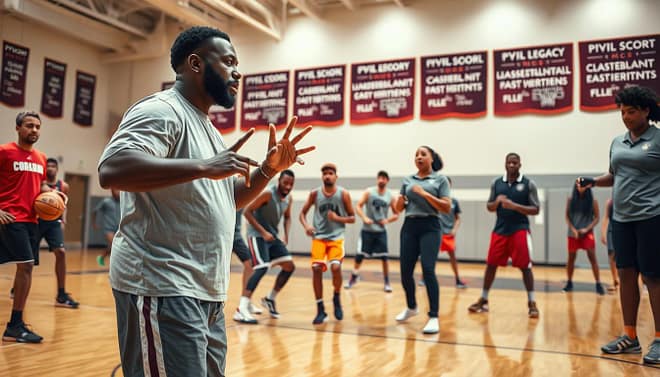
But the real genius of these coaching legends was their scope. They knew sports success alone was a flimsy shield against the world waiting outside the gym. So, the playbook included mandatory study halls, strict dress codes, and lectures on character. Discipline wasn’t about punishment. It was a form of freedom—a system to navigate a society rigged with barriers.
Their philosophies varied, but the core pillars were unshakeable. Let’s break down the blueprint.
| Coach Archetype | School Example | Core Principle | Lasting Impact |
|---|---|---|---|
| The Defensive Taskmaster | I.M. Terrell (Fort Worth) | “Offense sells tickets, defense wins games, but discipline wins life.” Press defense and relentless conditioning as metaphors for resilience. | Players known for their tenacity and mental toughness, on and off the court. |
| The Academic Enforcer | Wheatley (Houston) | No pass, no play was the bare minimum. Tutors were as important as assistant coaches. The library was an extension of the court. | Produced a high number of graduates who attended HBCUs and entered professional fields. |
| The Community Shepherd | Booker T. Washington (Dallas) | The team as an extension of the neighborhood. Players accountable to local shopkeepers and elders, not just the coaching staff. | Fostered a deep, enduring bond between school and residents, making every game a civic event. |
| The Fundamentals Purist | L.C. Anderson (Austin) | Rejection of “streetball” flair. Perfect form on every jump shot, crisp passes, and set plays executed under any duress. | A style of play that was methodical and efficient, often outlasting more athletic opponents. |
Look at that table. Notice something? The community pride wasn’t just an abstract concept. It was the fuel and the finish line. Coaches like these built systems where accountability was collective. Your mistake was your teammate’s problem to solve. Excellence was the only currency that mattered within those four walls.
Their legacy isn’t just etched in trophy cases. It’s in the posture of the men who left their gyms. They stood a little taller, not just from rebound drills, but from carrying the weight of expectation with grace. The Prairie View Interscholastic League provided structure and legitimacy. But these coaches provided the soul—a stubborn, brilliant, and unbreakable will.
Tournament formats, travel tales, and gym atmospheres
The PVIL postseason was more than just a game. It was a journey across Black Texas. Today’s big tournaments can’t compare to the passion of segregated era sports. It was basketball that brought communities together, with every game filled with deeper meaning.
Tournament formats were tough, testing teams’ endurance and strategy. Teams played back-to-back games, sometimes twice in one day. It was not just about winning; it was about managing stamina and morale.
Travel stories from those days are legendary. Buses were like mobile homes, where teams studied and bonded. Traveling through Jim Crow Texas was a challenge, but Black communities showed incredible hospitality. They fed and housed visiting teams, turning trips into a celebration of community pride.
Gyms were more than just venues. They were places where communities came together, filled with hope and energy. The air was alive with sweat, food smells, and the excitement of shared dreams.
The crowd’s energy was felt deeply. Every play was met with a strong reaction. The atmosphere was like a sixth player, adding to the game’s intensity. It was a time when community pride fueled both the players and the fans. For more on this era, check out our dedicated coverage.
The impact of these environments is huge. They built mental toughness in players. They learned to perform well in loud environments. In a time of exclusion, these gyms were places of joy and affirmation. The journey to the championship was more than just winning; it was about the community’s spirit.
Band culture, pep squads, and community rituals
A PVIL matchup was more than just a basketball game. It was a night of Black cultural theater, where community pride and identity took center stage. The band and pep squads added to the excitement, making it a show of artistic expression, a tradition documented in historical archives preserved by the Texas State Historical Association, which highlight the cultural significance of PVIL athletics beyond competition.
The band was a star, not just background music. They played funk-infused tunes that added to the game’s energy. A steal would start a drum frenzy, while a tense moment was marked by a single horn note. Their sound was unique, blending soul and power.
The pep squads were more than cheerleaders. They were choreographers of spirit, showing off their style and pride. Their moves told a story of school pride and hope, turning the sidelines into a stage.
The event was wrapped in community spirit. Pre-game rallies built excitement, while post-game celebrations shared stories. Win or lose, the game was a moment to come together.
Breaking down the cultural power of PVIL events reveals its magic. Each part played a key role in creating the experience.
| Component | Primary Role | Signature Vibe/Effect |
|---|---|---|
| The Band | Emotional Conductor & Sonic Identity | Funk-driven brass, improvisational call-and-response with the crowd, setting game tempo. |
| The Pep Squad | Visual Choreographer & Community Embodiment | Precision drill-team formations, sophisticated choreography, representing community elegance and discipline. |
| Community Rituals | Social Glue & Narrative Engine | Pre-game rallies (faith & hope), post-game gatherings (storytelling & bonding), turning the event into a lasting social memory. |
The band, pep squads, and rituals worked together. They created a space where winning was a team effort and losing was a shared experience. This was the true display of Black excellence in Texas Black high schools.
The gym was more than a sports venue; it was a cultural hub. The legacy of PVIL events lives on, felt in the rhythm of their music.
Player pipelines to HBCUs and the pros
The Prairie View Interscholastic League didn’t just recruit players. It turned local stars into national prospects. Football legends like “Mean” Joe Greene and Ken Houston are well-known. But the league also produced basketball talent with the same precision.
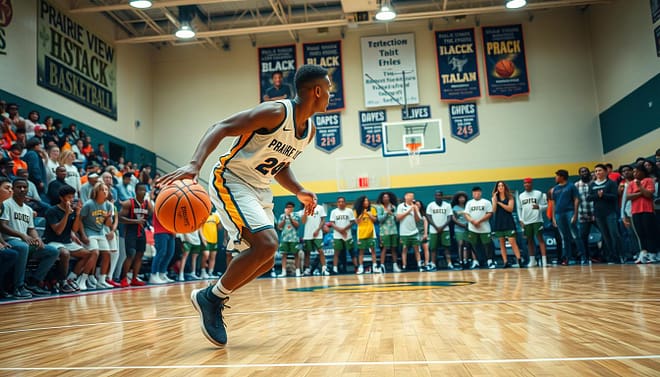
The PVIL pipeline didn’t just send players to college. It fueled HBCU dynasties. Schools like Texas Southern and Prairie View A&M got complete players, ready to play team-first basketball.
These players weren’t raw projects. They were tactical veterans, ready to play. They had been tested in games where every point was important.
The league was like a hidden draft board. It had its own quality control. The travel, rivalries, and tournament pressure were all part of the training. Players who made it to an HBCU were ready to refine their skills, not just learn the game.
This created a cycle of success. HBCU programs became national powerhouses. Their success highlighted the high school league that supplied them. Scouts knew that players from this system were ready for the pros.
The transition to professional basketball was natural for these athletes. They were seasoned competitors, not wide-eyed hopefuls. The Prairie View Interscholastic League had already taught them how to win under pressure.
While we celebrate football Hall-of-Famers, let’s not forget the basketball legacy. The PVIL was more than a league. It was a talent refinery. It turned raw skill into polished excellence at historically black colleges and beyond.
Signature games remembered by local papers
The magic of PVIL basketball was fueled by ink and community pride. Before digital days, the Houston Defender, Dallas Express, and San Antonio Register were the keepers of history. They were the only ones telling the stories of classic games.
These newspapers did more than report scores. They wove tales that made a community proud. A writer’s words were as important as a player’s skills.
What made a game newsworthy? It wasn’t always the big win. It was the close games, the buzzer-beaters, and the defensive battles. These were the moments that turned players into legends.
The reports were full of life. They told of fans’ emotions and the atmosphere. They even mentioned who was in the stands, like local church leaders.
The papers captured the joy of victory parades. They noted who was watching, like college scouts. It was more than sports; it was a way to map the community.
These old stories are like time capsules. They show the high stakes of segregated era sports. A loss could weigh heavily on a town for days.
These accounts are invaluable. They mix sports, culture, and identity. The details bring the games to life, showing why they were so important to PVIL communities.
The merger with UIL: gains and losses
The 1969 merger of the PVIL into the UIL was more like a takeover than a partnership. It was called integration, but in reality, it felt like a hostile takeover. The history and culture of Texas Black high schools were lost.
The state made the PVIL join the University Interscholastic League. This was seen as progress. But, the real cost was cultural and permanent.
What was gained? Access to bigger stages and better facilities. Athletes from former PVIL schools could compete more widely. This opened doors to college scholarships.
But what was lost? The history of PVIL state championships was ignored. School mascots and colors were changed. The unique history of these schools was lost.
The coaching styles of the PVIL clashed with the UIL’s focus on winning. The excellence of Texas Black high schools was not valued by the UIL.
To understand the trade-off, consider this balance sheet:
| Gains (The “On-Paper” Wins) | Losses (The Cultural Cost) |
|---|---|
| Access to better-funded UIL facilities and equipment | Erasure of PVIL championship records and statistics |
| Broader statewide competition and recognition | Dissolution of unique school identities, mascots, and traditions |
| A more streamlined path to collegiate scouting | Collision and devaluation of distinct coaching cultures |
| The symbolic victory of “integration” | The very specific legacy of Black athletic excellence was archived as a footnote |
| Potential for increased resource allocation (theoretically) | A profound, community-level loss of institutional memory and pride |
Was it worth it? That’s the wrong question. It was inevitable. The real tragedy was the loss of history and culture.
Think of it this way: you get a new library card but lose your family’s history. You have access but are erased. The gain was infrastructure, but the loss was soul.
This isn’t just about sports. It’s about how progress is measured. The 1969 merger provided a floor but also a ceiling. The fight is to keep the story of Texas Black high schools alive.
Efforts to preserve PVIL records and trophies
Who are the detectives trying to rebuild a sports dynasty’s story? They are a team of historians, former players, and educators. They are working hard to save the Prairie View Interscholastic League legacy. It’s a race against time and a fight against forgetting.
Leading this effort is Michael Hurd. He’s the director of the Texas Institute for the Preservation of History and Culture at Prairie View A&M University. A sports writer turned historian, Hurd knows that stats and scores need a human story to come alive. His institute is key in documenting African American Texans’ history, with PVIL at the forefront.
So, what does this work look like? Imagine volunteers digging through school basements, dusting off old trophies. They also digitize old newspaper clippings from the Houston Informer and Dallas Express. And they find elderly players for their stories before it’s too late.
This is more than just remembering the past. It’s about fixing the official record. These preservationists are creating the museum exhibit the PVIL deserved but never got. They’re putting together a complete story from broken pieces, making sure the league’s champions are remembered.
Their work makes sure the PVIL’s legacy is not forgotten. Instead, it’s placed as a key chapter in Texas sports, culture, and resilience.
Where to research: PVIL Museum, newspapers, alumni groups
Looking into the PVIL is like solving a mystery. You’ll search through museum archives, old newspapers, and even talk to people. The good news is, the trail is easy to follow, and the resources are out there for anyone eager to explore.
Think of this as your guide to uncovering a piece of history.
Start at the source: Prairie View A&M University. This is where the history of segregated era sports in Texas begins. The university has a special archive dedicated to preserving this history.
Here, you’ll find important documents like yearbooks and photos that were once overlooked.
Next, explore the Black press. Newspapers like the Houston Defender, Dallas Express, and San Antonio Register were key in sharing the PVIL’s story. They provided game recaps, player profiles, and more.
These papers are now online. A few hours browsing through them can give you more insight than many books.
Don’t forget to talk to people. The alumni associations of schools like Wheatley, Yates, and L.C. Anderson hold a wealth of knowledge. These groups are more than just lists; they are keepers of history.
Here, you’ll learn the stories behind the stats. A conversation with an alum can tell you why a game was important, what the atmosphere was like, and more.
So, why is this important today? Every piece of history we uncover is a step towards preserving a part of our past. It’s not just about dusty old books; it’s about reclaiming our heritage.
The story of segregated era sports is powerful and unfinished. We have the tools to complete it. The museum provides the structure, newspapers give us the timeline, and alumni share the heart of the story.
All you need is curiosity. Start your journey today.
Photo essay ideas and caption plan
History books have their limits. Sometimes, you need a whistle and a jump shot. The PVIL story’s full texture is in the images. A photo essay can make history come alive.
Imagine a series showing then and now. Place a grainy, triumphant 1958 team photo next to a portrait of that team’s captain today. The caption should analyze the gaze. What did that win mean for a town built on community pride?
Another idea is to focus on architecture. Document the forgotten gyms, their parquet floors now silent under dust. A wide shot of a crumbling facade tells one story. A tight close-up on a faded free-throw line tells another. The caption here excavates the echoes.
The most powerful shots might be the celebrations. A parade shot from a local paper’s archive is a goldmine. Who is that intense coach in the suit? What were they celebrating beyond the score? A great caption uses the image as a window. It reveals the pressure, the palpable joy of a world that built its own stage.
This visual plan isn’t just nostalgia. It’s active preservation. Each curated image, paired with a sharp caption, becomes a new primary source. It lets the legacy speak for itself, one frame at a time.